


Fast, Reliable HVAC Cleaning Across Stanford
HVAC cleaning in Stanford typically runs $280–$650 for a complete system service, with most jobs scheduled within 48 hours and completed same-day. We’re Brian Rivera and the team at Northstar Air Duct Cleaning Service San Francisco, and we make the drive down Junipero Serra Boulevard to Stanford regularly — not just for the academic buildings you might expect, but for the mid-century faculty homes tucked along streets like Lasuen and the graduate housing clusters near Escondido Village.
Stanford’s not like neighboring Palo Alto. The 94305 ZIP code sits almost entirely on university-owned land, which means when we clean an HVAC system here, we’re often working through Stanford Facilities Operations procurement or university housing management rather than answering to a single homeowner. That process is different. We know it because we’ve done it. If you’re a faculty member, housing coordinator, or facilities manager trying to get cleaner air moving through aging ductwork, call us at (855) 908-0725. We’ll walk you through what’s actually involved — no generic pitch.
Our HVAC Cleaning team brings commercial-grade Rotobrush and Nikro equipment to every Stanford job, whether we’re treating a legacy duct board system in a 1960s faculty bungalow or servicing a multi-unit air handler in graduate housing. The Santa Cruz Mountains foothills trap pollen here. The damp Bay Area winters let microbial growth take hold in old flex duct. These aren’t hypotheticals — they’re what we find when we open up systems on campus.
Why Northstar Air Duct Cleaning Service San Francisco Is Stanford’s Preferred HVAC Cleaning Company
We’ve earned 1,209 verified reviews averaging 4.9 stars across 14 years of focused air quality work — not general HVAC repair, not plumbing on the side, just the air moving through buildings. That specialization matters in Stanford, where the housing stock and procurement rules create problems a generalist rarely sees.
Brian Rivera — owner and lead technician — handles your job personally. He’s the one who assesses whether that crumbling duct board on a Lasuen Street faculty home can withstand mechanical cleaning, or whether we need to flag asbestos-containing insulation to Stanford Facilities before we touch it. No dispatched labor. No rotating crew of technicians who need a map to find the campus.
Our response time to Stanford is typically 24–48 hours for standard scheduling, with same-day availability for urgent air quality concerns — musty odors from microbial growth, visible debris blowing from vents, or post-renovation contamination in research support buildings. We know the campus loop, the faculty housing zones, and the graduate complexes. That local familiarity saves time on every job.
Property managers in Escondido Village and facilities staff in older academic buildings have told us the same thing: they need a contractor who understands university procurement and doesn’t treat Stanford like “just another Palo Alto call.” We don’t. The compliance layer here — asbestos assessment, Facilities coordination, housing management approval — is real, and we’ve navigated it repeatedly.
Our HVAC Cleaning Services in Stanford
Evaporator Coil Cleaning
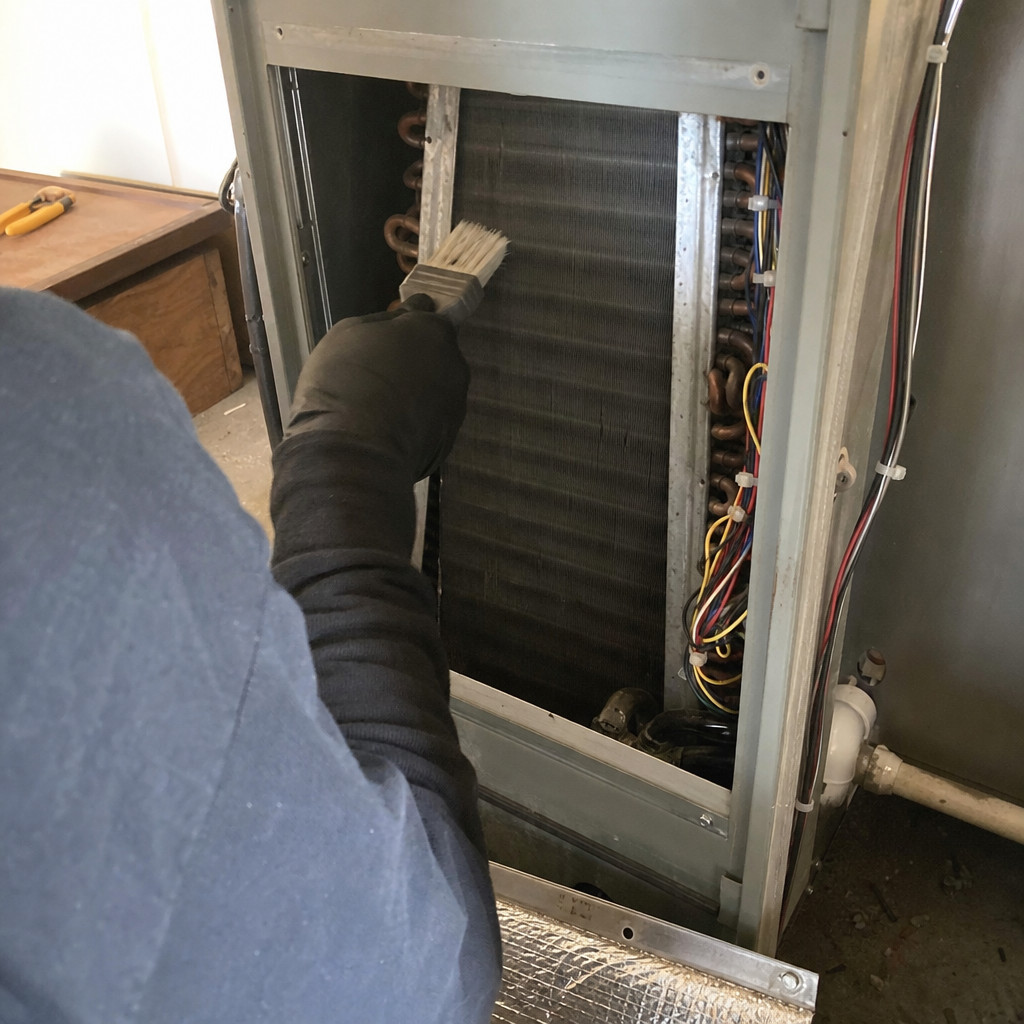
The evaporator coil is where your system actually conditions the air, and in Stanford it’s working overtime. Heavy pollen loads from campus eucalyptus groves and coast live oaks coat coils with sticky organic debris that standard filters miss, especially in older faculty homes with minimal filtration. We clean coils with professional-grade Nikro equipment and apply a Guardsman treatment to slow regrowth — critical in the damp winter months when microbial colonies thrive. A typical evaporator coil cleaning in Stanford runs $180–$320.
Blower Cleaning
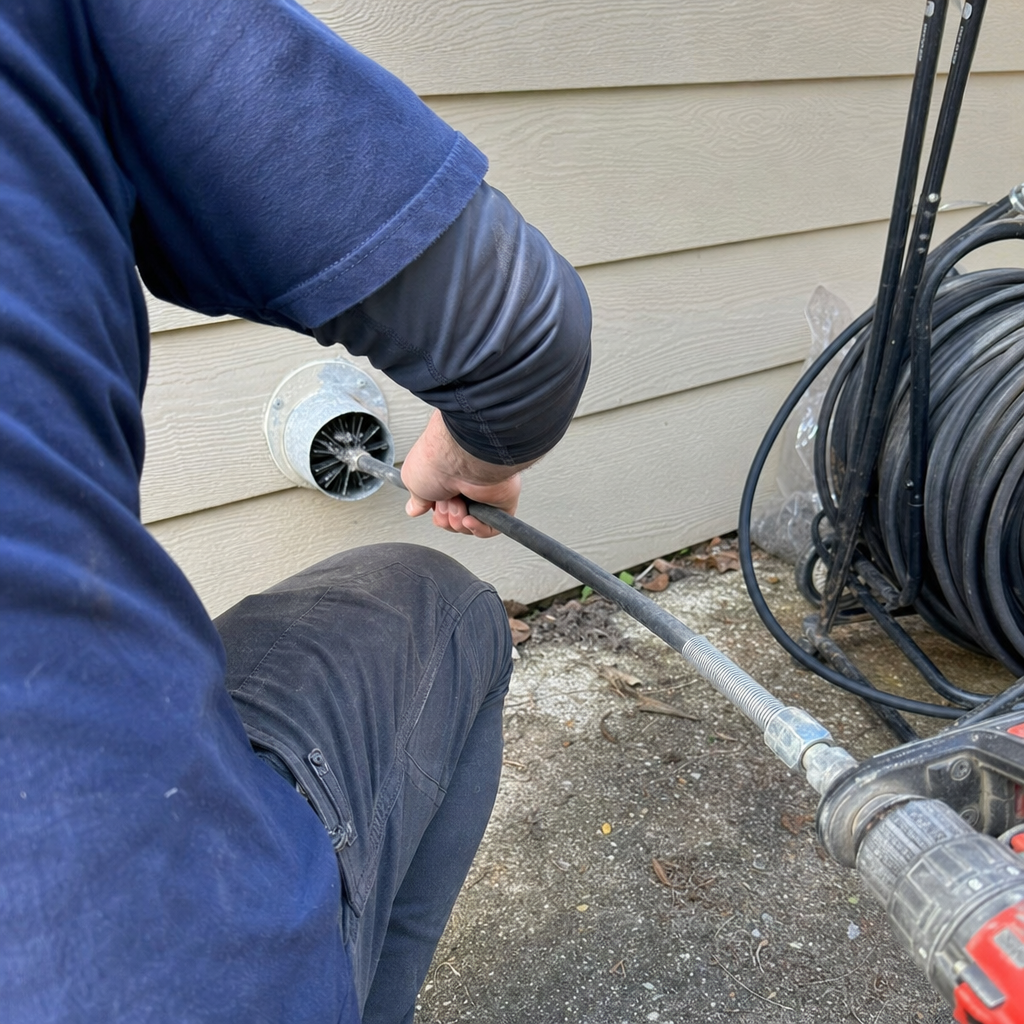
The blower motor and housing move every cubic foot of air through your system. In Stanford’s mid-century faculty homes, we’ve found blowers caked with decades of accumulated dust — the original duct board and flex duct configurations leak, drawing in attic debris and outdoor particulates that bypass filters entirely. Our Rotobrush system removes built-up contamination without dislodging fragile legacy components. Blower cleaning in Stanford typically costs $150–$260.
Condenser Cleaning
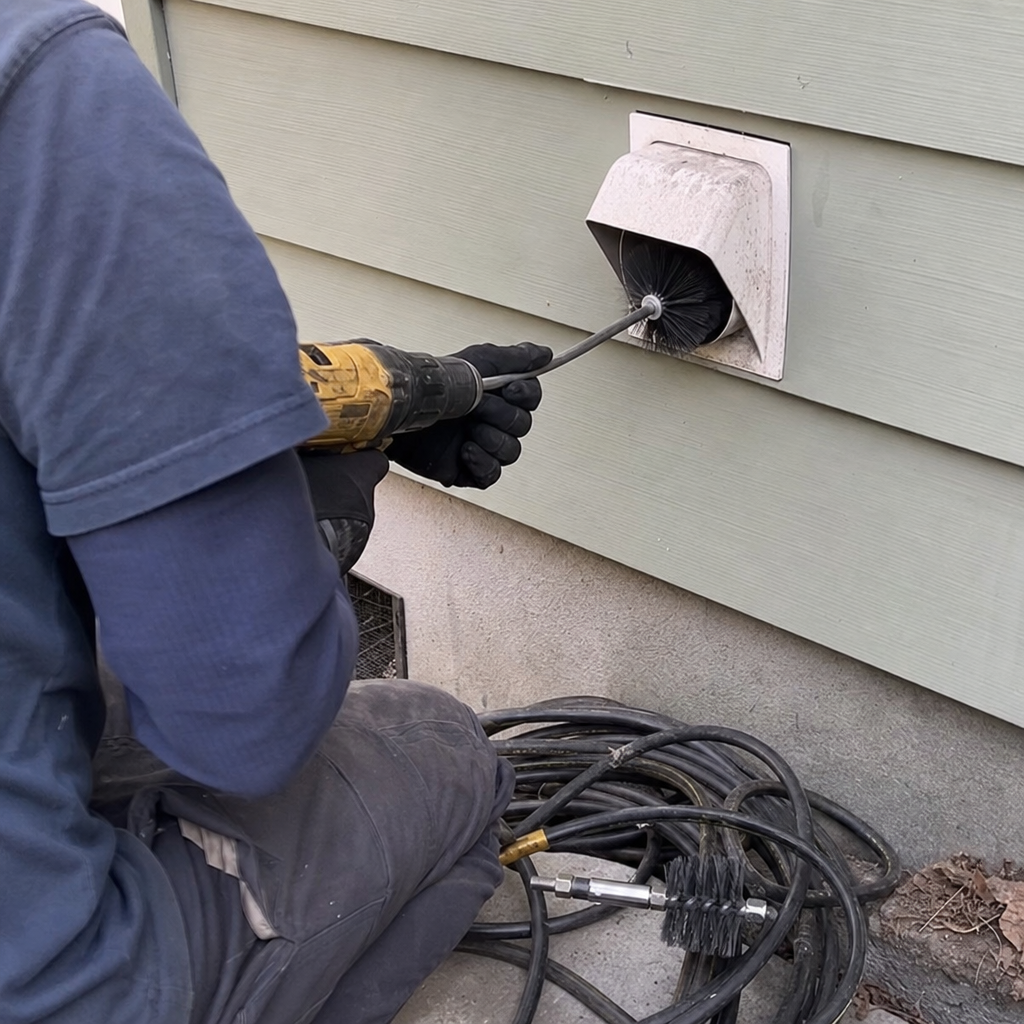
Outdoor condenser units on Stanford properties collect pollen, oak leaf debris, and dust from the dry May–October season. Restricted airflow forces the system to work harder and fail sooner. We clean condenser fins and housings with Abatement Technologies equipment, restoring proper heat exchange. This is especially important for multi-unit graduate housing where a single condenser serves multiple apartments and downtime affects multiple residents. Expect $120–$220 for condenser cleaning in Stanford.
Air Handler Cleaning
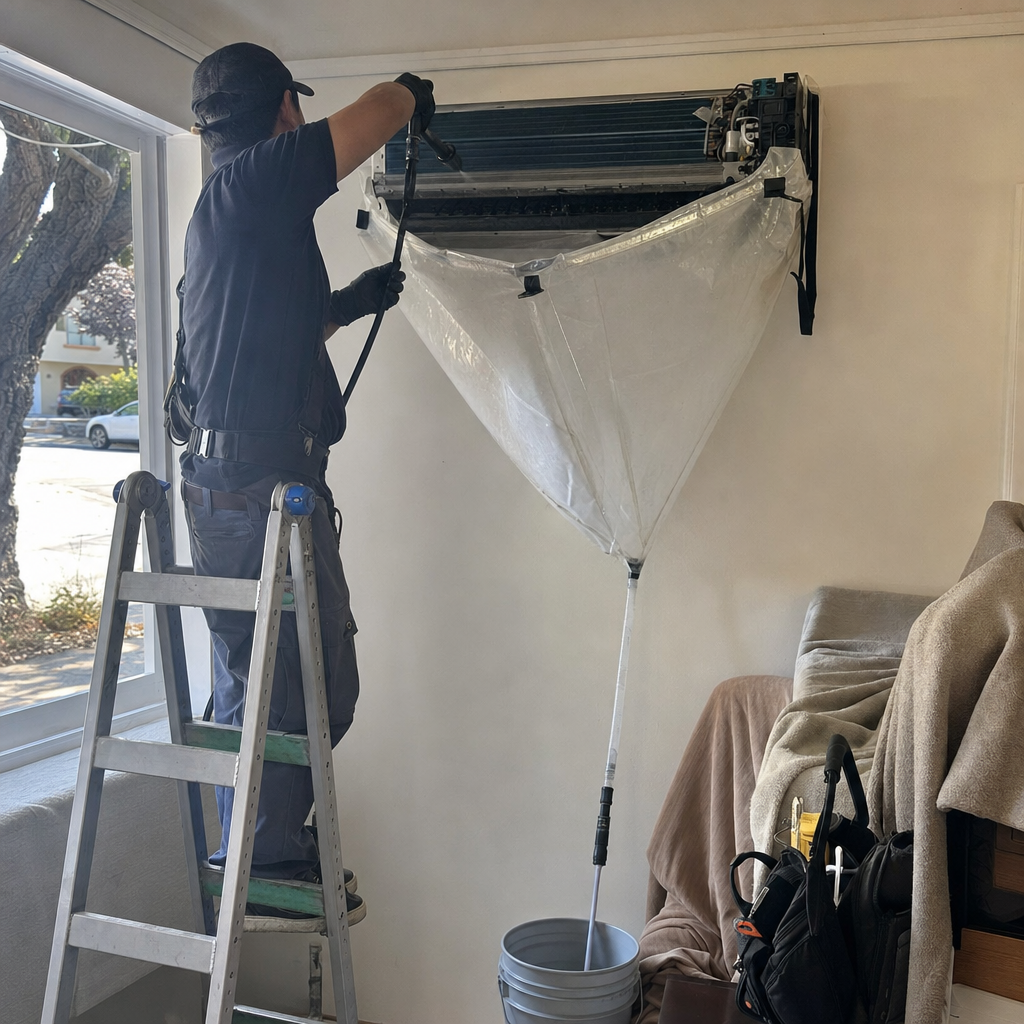
Air handlers in Stanford’s institutional and multi-unit residential buildings are workhorses that rarely get the attention they need. We clean the full air handler assembly — housing, drain pans, filters frames — using Nikro HEPA-contained equipment that prevents cross-contamination during service. For university-managed properties, we document our process for Facilities Operations records. Air handler cleaning in Stanford runs $240–$450 depending on unit size and accessibility.

Coil Treatment
After mechanical cleaning, we apply a Guardsman-grade coil treatment that creates a protective barrier against microbial regrowth. In Stanford’s climate — damp winters, pollen-heavy springs — this step separates a temporary fix from lasting results. The treatment is non-toxic and rated for occupied spaces, important in faculty housing where residents can’t relocate during service. Coil treatment as an add-on runs $80–$140; bundled with full HVAC cleaning, we include it at reduced rates.
What happens when you call
- 1
A real person answersNo phone trees — you reach a local pro.
- 2
You get an upfront price rangeHonest numbers before anyone is dispatched.
- 3
A background-checked tech heads outLicensed & insured, dispatched right away.
- 4
You approve before work beginsNothing starts until you say go.
Trusted Brands We Service in Stanford
We don’t show up with whatever a generalist keeps in a side van. Our Rotobrush and Nikro cleaning systems are the same units used in commercial remediation jobs — more power, better containment, and HEPA filtration that matters when you’re working in occupied faculty housing or active research support buildings. For sanitizing and coil treatment, we use Honeywell and Aprilaire products, with Guardsman-grade protective applications where microbial prevention is critical. We stock common replacement parts for systems found in Stanford’s housing stock: older Carrier, Trane, and Lennox units typical of 1960s–1980s construction. That inventory means faster turnaround and fewer return visits — important when you’re coordinating through university housing channels.
Common HVAC Cleaning Problems We See in Stanford Homes
- Degraded flex duct in mid-century faculty homes. The original flex duct and duct board in 1950s–1970s faculty housing crumbles with age, creating leaks that trap debris and moisture. We assess structural integrity before any mechanical cleaning and flag replacement needs to Facilities or housing management.
- Asbestos-containing insulation in pre-1980 buildings. Faculty homes and academic support buildings from this era may have asbestos duct tape mastic or insulation. We identify these materials during pre-cleaning inspection and halt work until proper abatement assessment is completed — a compliance step contractors working only in newer Menlo Park subdivisions rarely encounter.
- Rapid re-soiling from campus pollen loads. Stanford’s dense eucalyptus groves and ornamental plantings produce pollen counts that overwhelm standard filtration in older housing stock. We upgrade filter recommendations and apply coil treatments to extend cleaning effectiveness.
- Microbial growth from damp winter conditions. The Bay Area’s mild, wet winters let moisture accumulate in poorly sealed duct systems. We find visible mold and mildew in legacy duct board more often here than in drier East Bay locations, and we treat with appropriate antimicrobial protocols.
Pricing for HVAC Cleaning in Stanford, CA
HVAC cleaning in Stanford carries a specific cost structure tied to the housing stock and procurement complexity:
| Service | Typical Range in Stanford |
|---|---|
| Basic HVAC system cleaning (coils, blower, accessible ducts) | $280–$420 |
| Full system cleaning with coil treatment | $360–$550 |
| Air handler cleaning (multi-unit/institutional) | $240–$450 |
| Post-abatement cleaning (asbestos-cleared systems) | $450–$650 |
| Coil treatment (standalone add-on) | $80–$140 |
Several factors push Stanford jobs toward the higher end: university procurement documentation requirements, asbestos assessment delays, and the age/fragility of legacy duct materials that demand slower, more careful work. We don’t quote blind. Every estimate is free, on-site, and specific to your building. Call (855) 908-0725 to schedule — we’ll coordinate with Facilities or housing management as needed.
We Also Serve Cities Near Stanford
Our service radius covers the full Peninsula corridor. We regularly work in Palo Alto — where the homeowner market is straightforward compared to Stanford’s university-managed properties — as well as Atherton, East Palo Alto, and Los Altos Hills. Each city has distinct housing stock and air quality challenges; our equipment and expertise travel with us, but our approach adapts to local conditions.
Serving Stanford, CA — Our Local Coverage Area
We’re based in the Stanford area and know this community well. Use the map below to see our service coverage — if you’re nearby, we can almost certainly help.
FAQs — HVAC Cleaning in Stanford
Yes — because Stanford’s 94305 ZIP code is virtually entirely university-owned land, any HVAC cleaning in faculty housing, graduate complexes like Escondido Village, or academic buildings typically requires coordination with Stanford Facilities Operations or university housing management. Individual contractors cannot simply access these properties. We’ve worked within this procurement structure repeatedly and can guide you through the approval steps. Call (855) 908-0725 and we’ll explain what’s needed for your specific building.
It depends on the material’s condition — duct board and flex duct from this era often degrade and crumble, making aggressive mechanical cleaning risky. We inspect first. If the duct board is structurally sound, our Rotobrush system cleans gently enough to avoid damage. If it’s too far gone, we recommend replacement through Stanford Facilities rather than cleaning. Either way, you’ll get an honest assessment, not a forced sale. Call for a free inspection.
Yes — Stanford’s dense eucalyptus plantings, coast live oaks, and ornamental campus trees produce pollen loads that exceed typical suburban Peninsula levels, and older faculty housing often lacks adequate filtration to block these fine particulates. We see faster re-soiling here than in Palo Alto or Menlo Park. Our coil treatments and upgraded filter recommendations are specifically designed to combat this campus-specific challenge.
We identify it and stop work — we do not perform asbestos abatement ourselves, but we coordinate with certified abatement contractors and resume mechanical cleaning only after clearance documentation is complete. This compliance layer is mandatory and non-negotiable. Contractors who skip this step in pre-1980 Stanford buildings expose you and the university to serious liability. We’ve managed this process correctly on multiple campus jobs.
Because filters only catch what reaches them — in older multi-unit systems like those in Escondido Village, debris accumulates in blower housings, evaporator coils, and ductwork long before it ever sees a filter. Changed filters won’t touch built-up microbial growth or pollen-impacted coils. Our full HVAC cleaning removes contamination at its source and improves system efficiency measurably. For a free assessment of your Escondido Village unit, call (855) 908-0725.
Written by Brian Rivera, Owner at Northstar Air Duct Cleaning Service San Francisco, serving Stanford since 2011.