


Fast, Reliable Dryer Vent Cleaning Across Stanford
Dryer vent cleaning in Stanford typically runs $180–$340 for a standard residential job, with most appointments completed in under two hours. We’re usually on campus within 45 minutes of a call, and we coordinate directly with Stanford Facilities Operations when your unit requires housing management approval.
We’ve been driving down Junipero Serra Boulevard to Stanford jobs for fourteen years, and we know the difference between servicing a 1960s faculty bungalow on Salvatierra Walk and a graduate unit in Escondido Village. Our Dryer Vent Cleaning team handles the compliance layers that generalist contractors miss — from Facilities coordination to asbestos abatement assessments in pre-1980 buildings. If your dryer’s running hot or taking two cycles to finish a load, call us at (855) 908-0725. We’ll diagnose it on the phone and schedule a free estimate.
Why Northstar Air Duct Cleaning Service San Francisco Is Stanford’s Preferred Dryer Vent Cleaning Company
Brian Rivera — owner and lead technician — handles your job personally. That matters in Stanford, where most residential properties sit on university-owned land and vent work often requires navigating Facilities Operations protocols. We’ve built relationships with Stanford housing management over fourteen years of focused air quality work, so we know who to call and what paperwork moves the job forward.
Our track record is documented: 1,209 verified reviews averaging 4.9 stars. That’s not a marketing number — it’s a performance record across real jobs, many of them repeat visits to faculty housing and campus-adjacent properties. When a dryer vent fails in Stanford, it’s usually corrosion from salt-laden coastal air or pollen clogging from campus eucalyptus groves — problems we’ve solved hundreds of times.
We bring commercial-grade Rotobrush and Nikro equipment to every residential job. Not the lightweight gear a generalist HVAC company keeps in a side van. For vent rerouting and cap replacement in older housing stock, that equipment difference shows in the finished work.
Response time to Stanford averages under 45 minutes from our San Francisco base. We know the back routes past the foothills traffic and we schedule campus jobs to avoid Stanford event congestion.
Our Dryer Vent Cleaning Services in Stanford
Dryer Vent Inspection
Every Stanford job starts with a full inspection using Rotobrush camera equipment. In faculty housing on campus, we’re checking for corrosion damage to exterior caps — salt air off the Pacific attacks galvanized steel in three to five years here, faster than inland Palo Alto or Los Altos Hills. We also flag asbestos-containing duct insulation in pre-1980 buildings, which requires abatement assessment before any mechanical work proceeds. Our inspection report goes to you and, when needed, directly to Stanford Facilities Operations.
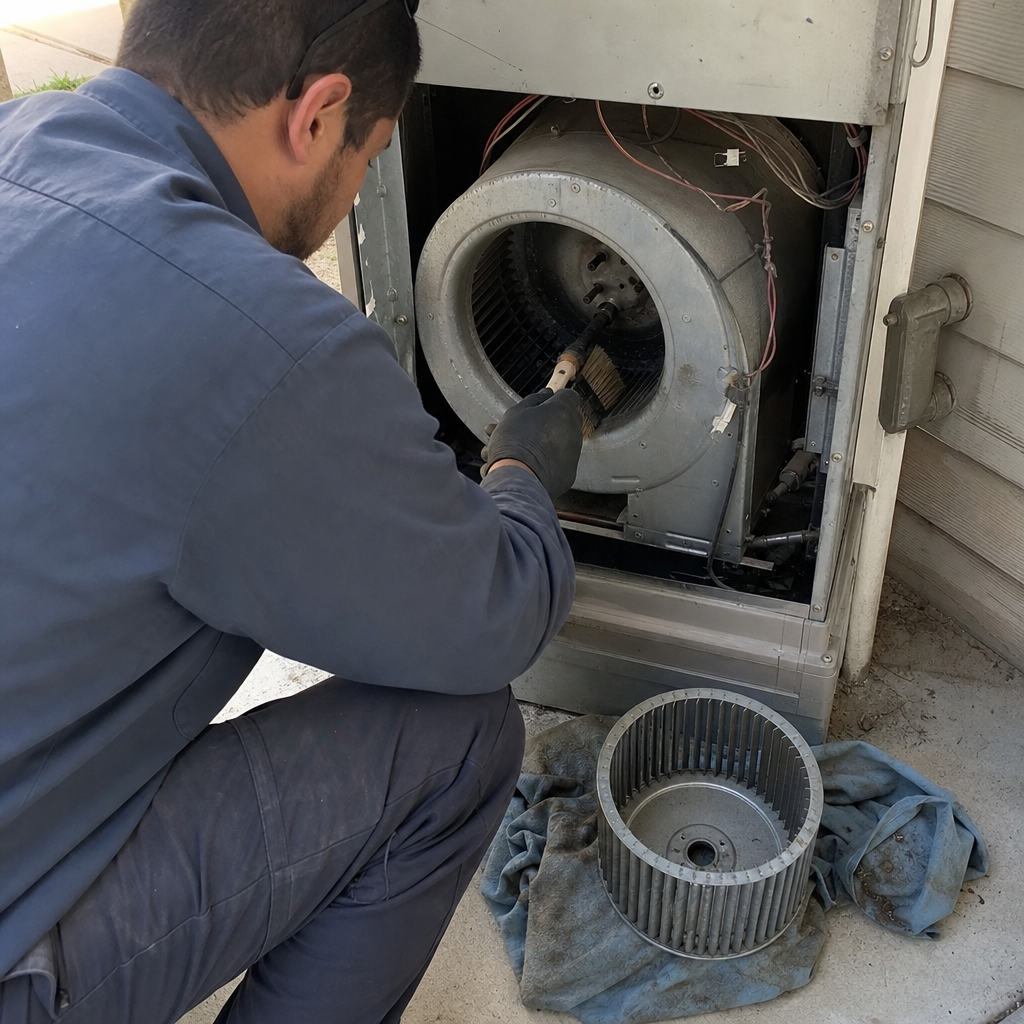
Vent Cleaning & Lint Removal
We clean the full vent run with Nikro high-velocity equipment and Rotobrush agitation tools, not shop vacuums. Stanford’s dry summers let lint pack hard against duct walls; by October, we’ve seen vents choked with a full season’s accumulation plus eucalyptus pollen and oak leaf particulate from campus plantings. We remove the lint, then verify airflow with a calibrated anemometer. The job isn’t done until we measure exhaust velocity at the manufacturer’s spec.
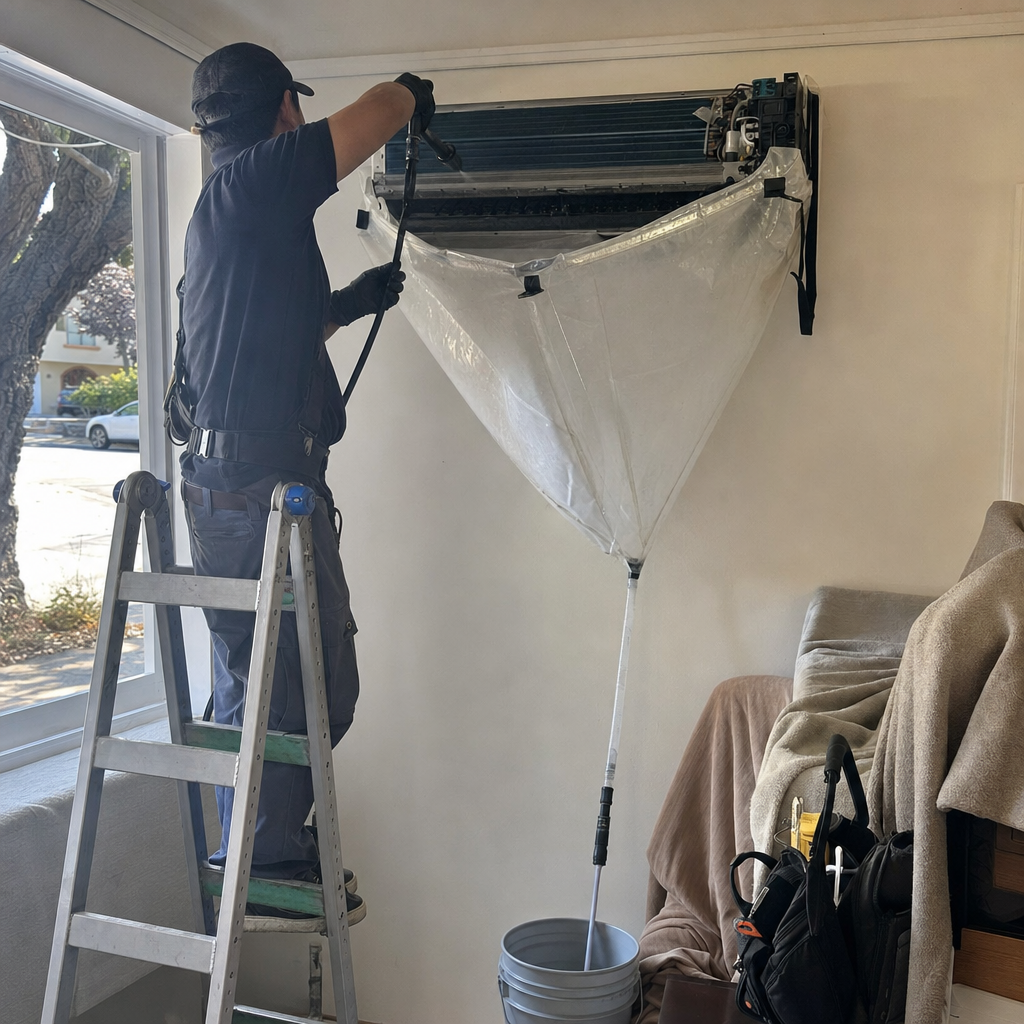
Vent Rerouting
Many mid-century faculty homes were built with dryer vents routed through outside walls or soffits that trap moisture against the building envelope. We’ve rerouted dozens of these in the Stanford hills, moving exhaust points to gable ends or roof caps that shed water and resist corrosion. Rerouting in university housing requires Facilities approval — we handle the drawings and coordination. Typical rerouting jobs in Stanford run $340–$580 depending on duct length and access.

Vent Cap Replacement & Bird Guard Installation
Galvanized vent caps corrode shut in Stanford’s coastal environment. We replace them with stainless steel or powder-coated aluminum caps that withstand salt air, and we install bird guards sized to keep nesting material out without blocking airflow. On a recent job at a mid-century faculty home on Salvatierra Walk, our crew found that the original galvanized dryer vent cap had corroded shut due to salt-laden coastal air, choking airflow and causing excessive lint buildup. We replaced it with a stainless steel cap and installed a Rotobrush lint trap, then rerouted the flexible duct away from an outside wall to prevent future corrosion.
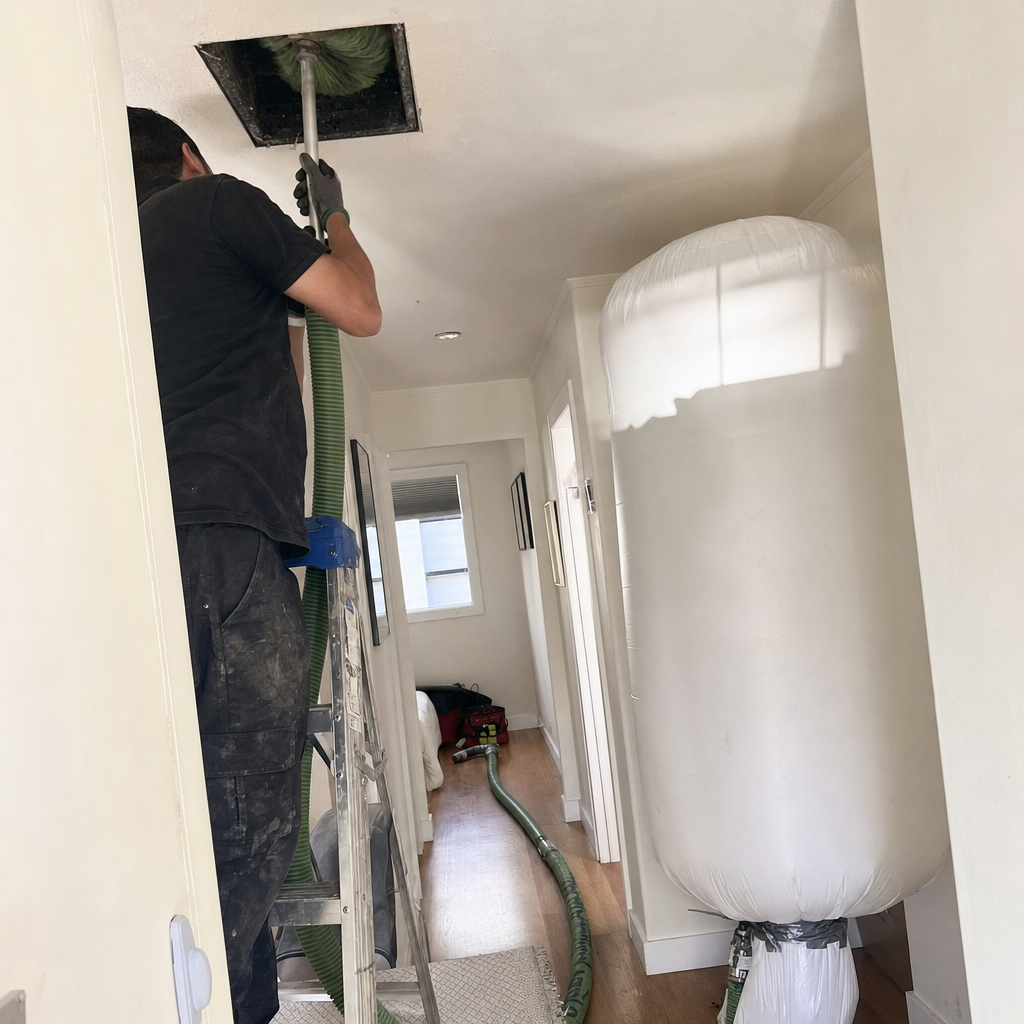
What happens when you call
- 1
A real person answersNo phone trees — you reach a local pro.
- 2
You get an upfront price rangeHonest numbers before anyone is dispatched.
- 3
A background-checked tech heads outLicensed & insured, dispatched right away.
- 4
You approve before work beginsNothing starts until you say go.
Trusted Brands We Service in Stanford
We stock replacement caps, bird guards, and transition ducts from Rotobrush and Abatement Technologies, with stainless hardware from Nikro for coastal corrosion resistance. For Stanford jobs, we carry extended-length flexible duct and specialty roof-cap assemblies that match the older construction profiles common in 1950s–1970s faculty housing. Most cap replacements and guard installations ship same-day from our San Francisco inventory, so we’re not waiting on parts while your dryer sits idle. When sanitizing is needed after mold or rodent intrusion, we apply Guardsman-grade treatments — the same protocol used in commercial remediation.
Common Dryer Vent Cleaning Problems We See in Stanford Homes
- Salt air corrosion seizes vent caps shut. Stanford sits close enough to the coast that salt-laden air corrodes galvanized steel caps and louvers in three to five years. The cap jams closed, lint backs up into the dryer cabinet, and fire risk climbs. We see this most often on west-facing exposures in faculty housing near Campus Drive.
- Asbestos-containing duct insulation blocks cleaning access. Pre-1980 faculty homes and older academic support buildings may have asbestos-containing duct insulation or mastic tape — a known hazard in this era of construction. We identify this during inspection and coordinate abatement assessment before proceeding, a compliance step contractors working only in newer Palo Alto subdivisions rarely encounter.
- Campus pollen clogs exterior screens. Stanford’s dense eucalyptus groves and coast live oaks release heavy seasonal pollen loads that pack into vent screens and louvers. By late summer, we’ve measured 40% airflow reduction in vents facing the Arboretum or the Oval plantings. Cleaning the screen isn’t enough — we remove and wash the assembly, then verify unrestricted exhaust.
- Original flex duct degrades in wall cavities. Many Escondido Village and graduate housing units still run original flexible duct through unconditioned spaces. The Bay Area’s damp winters degrade the plastic liner; we find tears and collapses that trap lint in wall cavities. Rerouting to rigid metal duct solves it permanently.
Pricing for Dryer Vent Cleaning in Stanford, CA
| Service | Typical Range in Stanford |
|---|---|
| Standard dryer vent cleaning (single-family faculty home) | $180–$260 |
| Multi-unit / stacked dryer vent cleaning | $220–$340 |
| Vent cap replacement (stainless steel) | $85–$140 |
| Bird guard installation | $75–$120 |
| Vent rerouting (including materials) | $340–$580 |
| Asbestos abatement coordination / assessment | $150–$300 (third-party lab fees may apply) |
Stanford pricing runs comparable to Palo Alto and Menlo Park for straightforward jobs, but university housing coordination and asbestos assessment steps can add $150–$300 to older properties. We quote upfront after inspection — no open-ended billing. Every estimate is free and includes a written scope. Call (855) 908-0725 to schedule.
We Also Serve Cities Near Stanford
Our service radius covers the full Peninsula corridor. We regularly run dryer vent cleaning in Palo Alto to the north, Atherton and Los Altos Hills to the west, and East Palo Alto to the northeast. Each city gets the same owner-led service and commercial-grade equipment — though Stanford’s university-owned housing environment remains unique in the region for its Facilities coordination requirements.
Serving Stanford, CA — Our Local Coverage Area
We’re based in the Stanford area and know this community well. Use the map below to see our service coverage — if you’re nearby, we can almost certainly help.
FAQs — Dryer Vent Cleaning in Stanford
Yes — most faculty housing and graduate units in Stanford’s 94305 ZIP code sit on university-owned land, so Facilities Operations or housing management must approve access and any structural modifications. We handle this coordination directly; we’ve worked with Stanford Facilities for fourteen years and know the procurement process. Call (855) 908-0725 and we’ll verify your building’s requirements before scheduling.
Every 12–18 months for most Stanford properties, and annually if your vent faces west toward the salt air or sits beneath heavy campus tree cover. The combination of salt corrosion and pollen accumulation accelerates blockage compared to inland Bay Area locations. If your dryer’s taking longer than 55 minutes per load, you’re already overdue. Call for a free inspection — we’ll measure your actual airflow and tell you where you stand.
Stainless steel or marine-grade powder-coated aluminum — never galvanized steel, which corrodes shut in 3–5 years here. We install caps with integrated bird guards and removable lint screens that we can clean without tools. The right cap costs $85–$140 installed and eliminates the repeat failure pattern we see on original hardware. We stock Stanford-appropriate caps in our San Francisco inventory for same-day replacement.
We can, after abatement assessment. Pre-1980 faculty homes and academic support buildings on campus may have asbestos-containing duct insulation or mastic tape — a documented hazard in this construction era. We identify suspect materials during our initial inspection and coordinate third-party assessment before any mechanical cleaning begins. This compliance step protects occupants and workers; contractors who skip it put everyone at risk. Most assessments run $150–$300; we manage the scheduling and documentation.
Stanford’s damp winter air (November–March) already extends drying times, but a partially blocked vent compounds the problem dramatically. Lint that packed tight during the dry summer now absorbs moisture, further restricting airflow. We see this spike in calls every January from Escondido Village and faculty housing near Governor’s Avenue. A full vent cleaning restores normal dry times; if your vent’s also corroded or improperly routed, we’ll flag that during inspection. Call (855) 908-0725 for a free estimate — most winter jobs we book same-week.
Written by Brian Rivera, Owner at Northstar Air Duct Cleaning Service San Francisco, serving Stanford and the Peninsula since 2011.