
How to Choose the Right Air Duct Cleaning Company in San Francisco
The right air duct cleaning company in San Francisco is the one where the person quoting your job is the same person running the equipment — owner-operated outfits deliver measurably better outcomes than franchise or subcontractor models because accountability doesn’t get handed off to a third-party crew. After 14 years and 1,209 verified jobs across the city, we’ve learned that equipment brands and review stars matter less than whether the individual doing the work has their name on the business. If you’d rather skip the vetting and talk directly with the owner who’ll handle your job, call (855) 908-0725 for a free estimate.
Here’s the mistake most San Francisco homeowners make: they treat duct cleaning like a commodity service. They call three companies, pick the middle quote, and hope for the best. But in a market where lead-generation platforms dispatch independent contractors who’ve never met the company owner, “who actually shows up at your door” is the variable that determines whether your ducts get cleaned or just vacuumed at the registers.
Why “Who Does the Work” Is the Most Important Question in San Francisco
San Francisco’s housing stock creates unique challenges — Victorian-era duct retrofits in the Mission, high-rise shared systems in SoMa, fog-driven moisture issues in the Sunset — and those challenges don’t resolve themselves through a standardized playbook. When a company uses subcontractors or franchise labor, the technician often sees your job for the first time when they pull up to the curb. They’re working from a checklist, not from accumulated neighborhood-specific experience.
We see the aftermath regularly. Last month, a homeowner in Noe Valley called us after a “bargain” cleaning left visible debris in a return duct that any experienced operator would’ve flagged immediately. The company they’d hired operated through a national booking platform; the technician was on his third week in the trade and had been given a residential-grade shop vac and a script.
Owner-operated companies invert this model. When Brian Rivera — owner and lead technician — handles your job personally, the 14 years of San Francisco-specific problem-solving comes with him. He’s the one who quoted the scope, selected the equipment, and has a direct reputation stake in the outcome. That structural difference shows up in:
- Pre-job assessment accuracy — no surprises that get blamed on “unforeseen conditions”
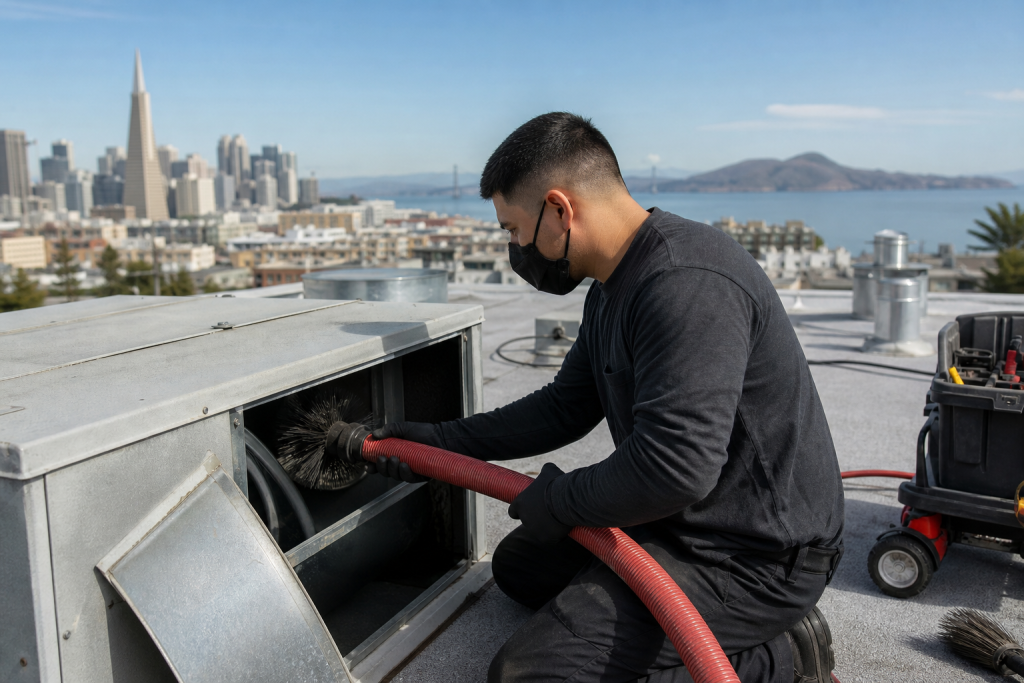
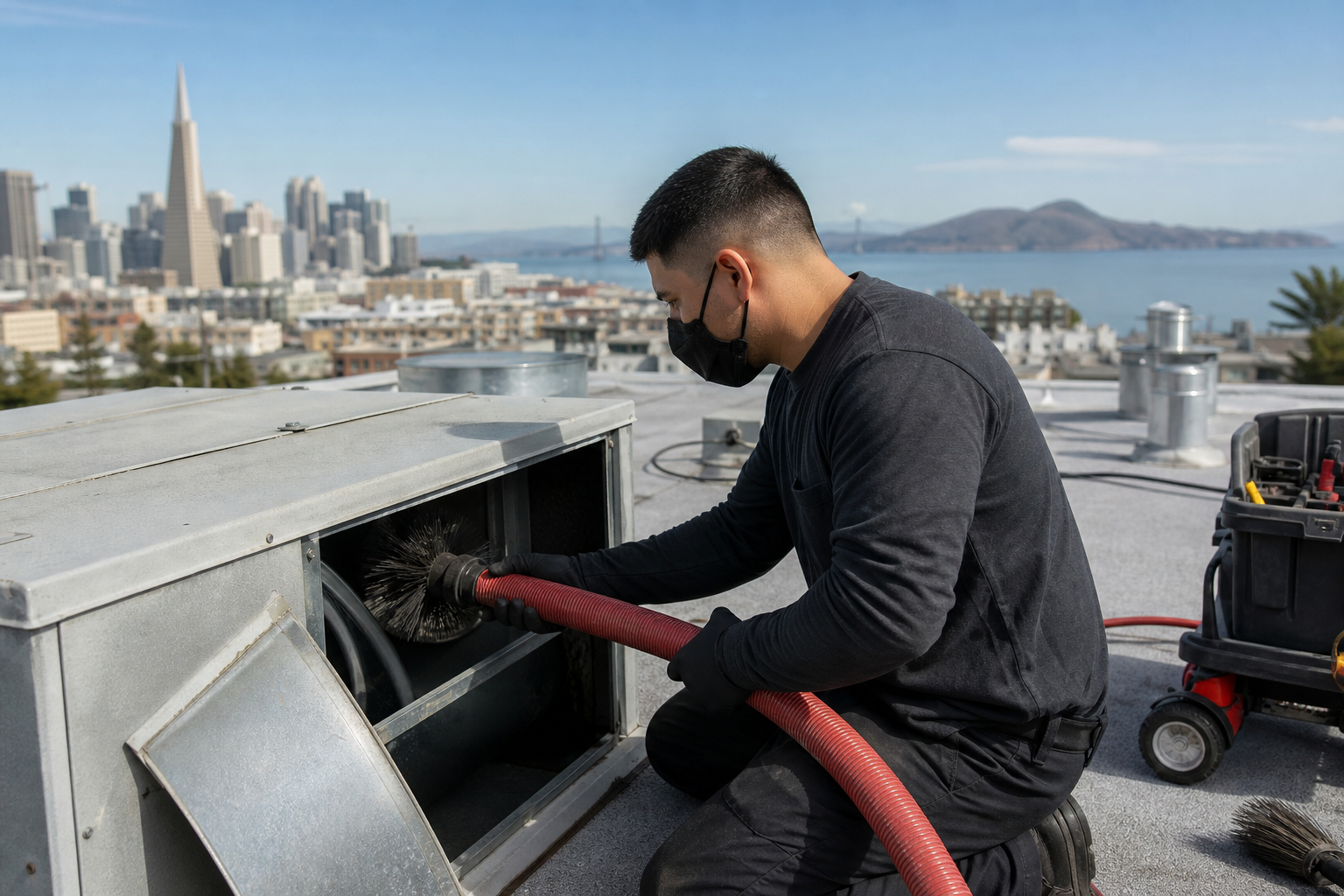
- Equipment matching — professional-grade Rotobrush and Nikro systems, not whatever fits in a side van
- Cleanup discipline — the person who promised your home would be left intact is the person holding the tools
- Post-job accountability — callbacks go to the owner, not a dispatch queue
In a city where the median home price makes every service decision consequential, that accountability structure isn’t a luxury — it’s risk management.
The Five-Minute Phone Screen That Exposes Lead-Gen Middlemen
You don’t need to be a detective. Five targeted questions separate direct operators from booking platforms:
- “Who will be physically performing the cleaning?” If the answer is “one of our certified technicians” without a name, you’re likely talking to a dispatcher, not the operator.
- “How long has that person been with your company?” High turnover is a subcontractor red flag. We’ve been running the same Rotobrush and Nikro systems with the same lead technician for 14 years.
- “What equipment will you use on my specific duct type?” Generic answers (“our truck-mounted system”) suggest they haven’t assessed your job. We specify Abatement Technologies HEPA filtration for post-remediation work, or Rotobrush contact cleaning for flexible ductwork — because the tool should match the application.
- “Can I see documentation of the completed scope?” Companies that balk at post-job photos or written verification often have something to hide.
- “What’s your process if I find debris after you leave?” The honest answer from a direct operator: “I’ll come back myself.” The middleman answer: “We’ll open a ticket with our quality team.”
That last distinction matters enormously in San Francisco, where parking constraints and building access make return visits costly and logistically complex. When the owner is the technician, “I’ll handle it” means exactly that.
How to Read San Francisco Reviews for Real Signals
Review volume beats cherry-picked testimonials. Our 1,200+ verified reviews averaging 4.9 stars represent a documented performance record across real jobs — not a handful of hand-selected quotes. But beyond the headline number, here’s what to look for in San Francisco-specific reviews:
- Neighborhood mentions — Reviews that name specific areas (Richmond, Bayview, Potrero Hill) indicate genuine local coverage, not imported or incentivized feedback
- Detail about the technician — “Brian showed up on time” versus “the crew was professional” — named individuals signal direct operation
- Equipment specificity — Mentions of Rotobrush, HEPA filtration, or camera inspection indicate informed customers who were actually shown the process
- Problem-resolution stories — How a company responds to the inevitable issue reveals more than perfect 5-star runs
Be suspicious of review profiles with 50 ratings spread across three years — that’s roughly one job per month in a market this size, suggesting either extreme selectivity or minimal actual volume. In a city of 800,000+ residents, legitimate specialists should have substantive review history.
Equipment Questions That Separate Professionals from Pretenders
Generic “commercial-grade” claims are meaningless. The specific tools matter, and you should ask about them:
| Equipment Type | What to Ask For | Red Flag |
|---|---|---|
| Agitation/Contact Cleaning | Rotobrush or equivalent rotary brush systems with HEPA extraction | “We use compressed air” — insufficient for adhered debris |
| Negative Air/HEPA Collection | Nikro or Abatement Technologies portable HEPA units | Shop vac with “HEPA filter” — inadequate airflow for duct containment |
| Post-Cleaning Sanitizing | Honeywell or Aprilaire application with documented product | “We fog with antimicrobial” — unverifiable, potentially ineffective |
| Dryer Vent Cleaning | Rotary brush with reverse-skipper ball and high-velocity extraction | Leaf blower from the interior — doesn’t remove lint accumulation |
The equipment question isn’t about brand snobbery. It’s about whether the company has invested in tools appropriate to the full range of San Francisco building types — from 1920s Victorians with original duct modifications to modern high-rises with fire-rated shaft enclosures. A generalist HVAC company keeping a side van of basic equipment can’t match the outcomes of a specialist deploying the same tools used in commercial remediation.
We use professional-grade Rotobrush and Nikro equipment — the same systems deployed in commercial remediation — on every residential job. That’s not marketing; it’s the minimum effective dose for actual debris removal.
What Post-Job Verification Should Look Like
Any company confident in their work should document it. Here’s what we provide and what you should demand:
- Before/after photography — Interior duct photography showing register, trunk line, and return conditions
- Written scope completion — Specific services performed, equipment used, and any access points created or restored
- Debris disposal documentation — What was removed and how it was handled (relevant for post-renovation or mold-remediation cleanings)
- Recommended maintenance interval — Based on your specific system, not a generic “every 3-5 years”
Companies that resist documentation — “trust us, we got it all” — are asking for unverifiable faith. In 14 years, we’ve never had a customer regret having photographic proof; we’ve had several who were glad they demanded it when a subsequent HVAC inspection confirmed our work.
Related services in San Francisco: If your system needs more than cleaning, we handle Northstar Air Duct Cleaning Service San Francisco home for full-scope air quality work, or see our dedicated pages for Air Duct Cleaning in Daly City, Dryer Vent Cleaning in Daly City, and HVAC Cleaning in Daly City.
When to Call a Pro Immediately
Some conditions don’t wait for comparison shopping. Call for same-day assessment if you’re experiencing:
- Visible mold growth inside ducts or on registers — particularly after San Francisco’s fog-heavy seasons when moisture accumulates in unconditioned spaces
- Carbon monoxide detector alerts combined with furnace or dryer performance issues
- Post-renovation dust circulation that’s triggering respiratory symptoms
- Dryer taking multiple cycles — lint accumulation in exterior venting creates genuine fire risk
These aren’t maintenance opportunities; they’re safety issues where equipment and experience matter immediately.
The Bottom Line
Choosing the right air duct cleaning company in San Francisco comes down to structural accountability. Owner-operated specialists with documented equipment, substantial review volume, and transparent post-job verification outperform subcontractor chains on every measurable outcome — and the vetting process to identify them takes about five minutes on the phone.
Key takeaways:
- Ask “who does the work” before asking about price
- Demand equipment specifics, not generic “commercial-grade” claims
- Verify review volume and neighborhood-specific detail
- Insist on post-job documentation
- Treat subcontractor models as higher-risk in a market where building complexity rewards experience
If you’re in San Francisco and want to skip the screening process, Northstar Air Duct Cleaning Service San Francisco offers free estimates with direct owner involvement from quote through completion. Brian Rivera handles every job personally. Call (855) 908-0725 to discuss your system.
Frequently Asked Questions
Most San Francisco homes fall in the $400–$800 range for complete system cleaning, with variables including duct accessibility, system size, and whether dryer vent or sanitizing services are bundled. Victorian-era homes with modified ductwork or high-rise units with limited access points typically run higher due to labor time. Call (855) 908-0725 for an exact quote — estimates are free and include on-site assessment by the owner.
Not usually — and often more expensive in total cost. Generalist companies typically treat duct cleaning as a low-margin add-on, sending less experienced technicians with basic equipment. The result is frequently incomplete cleaning that requires re-service. Specialist operators with professional-grade Rotobrush and Nikro systems deliver complete debris removal in one visit, which costs less than two incomplete jobs.
Legitimate operators answer direct questions about who performs the work, what equipment they use, and what documentation they provide. Red flags include: quotes given without seeing your system, pressure for immediate booking, refusal to provide local references, and “whole house specials” under $200 that don’t cover actual ductwork. In San Francisco, verify the business has a physical local presence and substantial review history — not a handful of generic testimonials.
Every 3–5 years for standard residential systems, with shorter intervals for homes with pets, recent renovations, or residents with respiratory sensitivities. San Francisco’s coastal moisture and older housing stock can accelerate particulate accumulation, particularly in neighborhoods with fog exposure like the Sunset or Richmond. After wildfire smoke events — increasingly common in Northern California — assessment and potential cleaning should happen regardless of interval. Call (855) 908-0725 if you’re unsure whether your system needs service.
Written by Brian Rivera, Owner & Lead Technician at Northstar Air Duct Cleaning Service San Francisco, serving San Francisco since 2012.
Need Air Duct Cleaning Help?
Call Northstar Air Duct Cleaning Service San Francisco — licensed & insured, here with fast after-hours help in San Francisco.
(855) 908-0725