
Fast, Reliable Duct Repair & Sealing Across Stanford
Duct repair and sealing in Stanford typically costs $280–$650 for most residential jobs, with same-week scheduling available for university housing and faculty properties. We’re familiar with Stanford’s unique landscape — from the 1950s faculty homes along Salvatierra Walk to the graduate housing complexes in Escondido Village — and we understand that getting work done here often means coordinating with Stanford Facilities Operations rather than calling a standard contractor.
Stanford sits at the base of the Santa Cruz Mountains foothills, where heavy pollen loads from eucalyptus groves and coast live oaks infiltrate aging duct systems, and where coastal salt air accelerates the degradation of mastic sealant on metal duct connections. We’ve spent 14 years working on the Peninsula, and our Duct Repair & Sealing team knows the difference between a standard Palo Alto ranch and a university-managed property with pre-1980 asbestos-containing duct insulation. If you’re noticing weak airflow, musty smells, or rising energy bills in your Stanford home, call us at (855) 908-0725 for a free estimate.
Why Northstar Air Duct Cleaning Service San Francisco Is Stanford’s Preferred Duct Repair & Sealing Company
Brian Rivera — owner and lead technician — handles your job personally, not some dispatched crew you can’t vet. That’s a different proposition in Stanford, where university housing management and faculty residents need accountability they can trace. We’ve built a 4.9-star average across 1,209 verified reviews, and that track record matters when you’re navigating Stanford’s procurement process or reporting back to Facilities Operations.
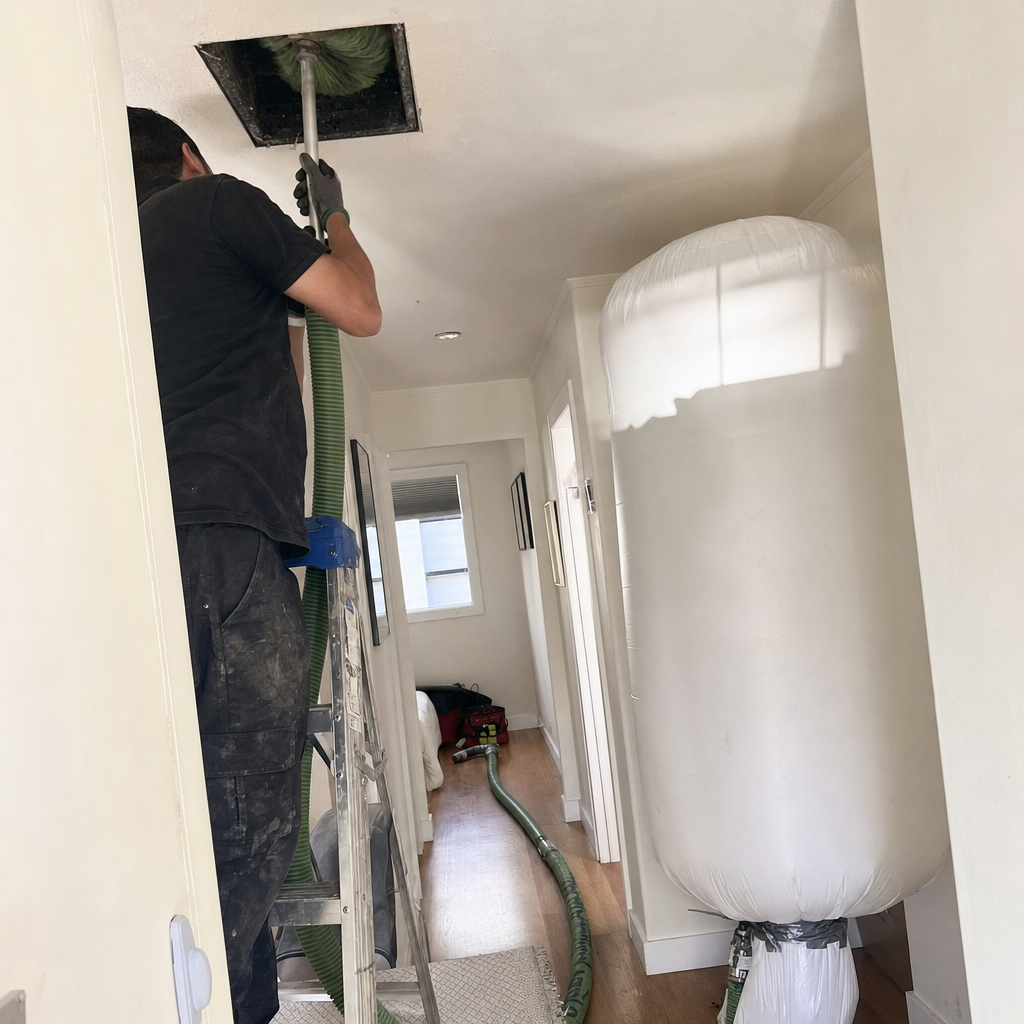
Our response time to Stanford is typically same-day or next-day, depending on whether the job requires abatement assessment for asbestos-containing materials — a step we never skip on pre-1980 properties. We know the local housing stock: mid-century faculty homes with original flex duct, older bungalows from Stanford’s early expansion era, and multi-unit graduate complexes with centralized systems. This isn’t generalist HVAC work. We use professional-grade Rotobrush and Nikro equipment, plus Abatement Technologies containment systems when asbestos is suspected — the same tools deployed on commercial remediation jobs, not the side-van kit a generalist hauls around.
Our Duct Repair & Sealing Services in Stanford
Duct Sealing
Leaky ducts waste 20–30% of conditioned air before it reaches your vents. In Stanford’s mid-century faculty homes, we regularly find separated flex duct joints in uninsulated crawlspaces where thermal cycling from the Bay Area’s cool nights and warm days has loosened connections over decades. Our duct sealing process starts with a pressure test to map leak locations, then we apply mastic sealant or mechanical fasteners depending on the duct material. For university-managed properties, we document everything for Facilities Operations review.
Mastic Sealant Application
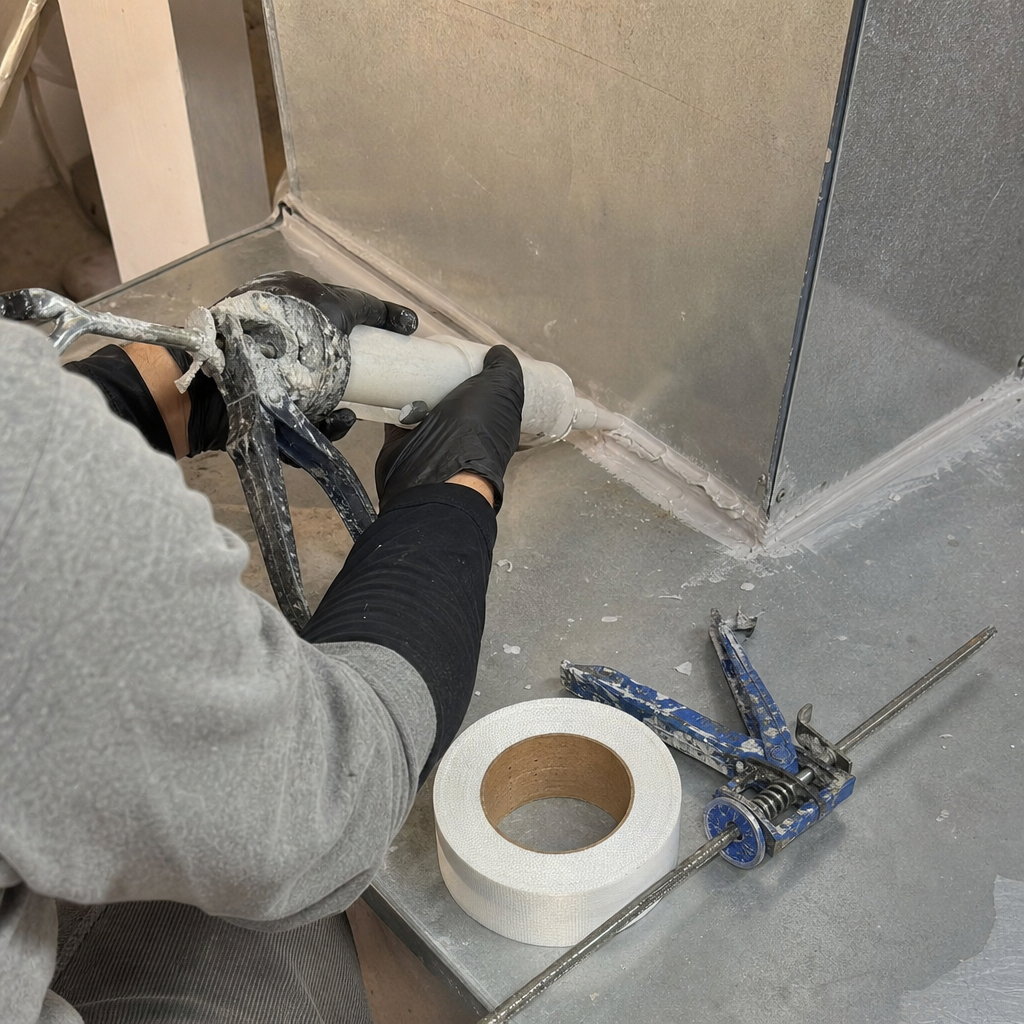
Mastic is the workhorse of durable duct sealing, but Stanford’s coastal salt air degrades it faster than inland climates. We use Guardsman-grade mastic formulations rated for marine-adjacent environments, applied to metal duct connections with proper curing time. On a recent job near Campus Drive, we resealed a 1970s metal trunk line where original mastic had cracked after years of salt-air exposure. The fix dropped the system’s static pressure reading from 0.9 to 0.45 inches — measurable results, not guesswork.
Metal Duct Repair
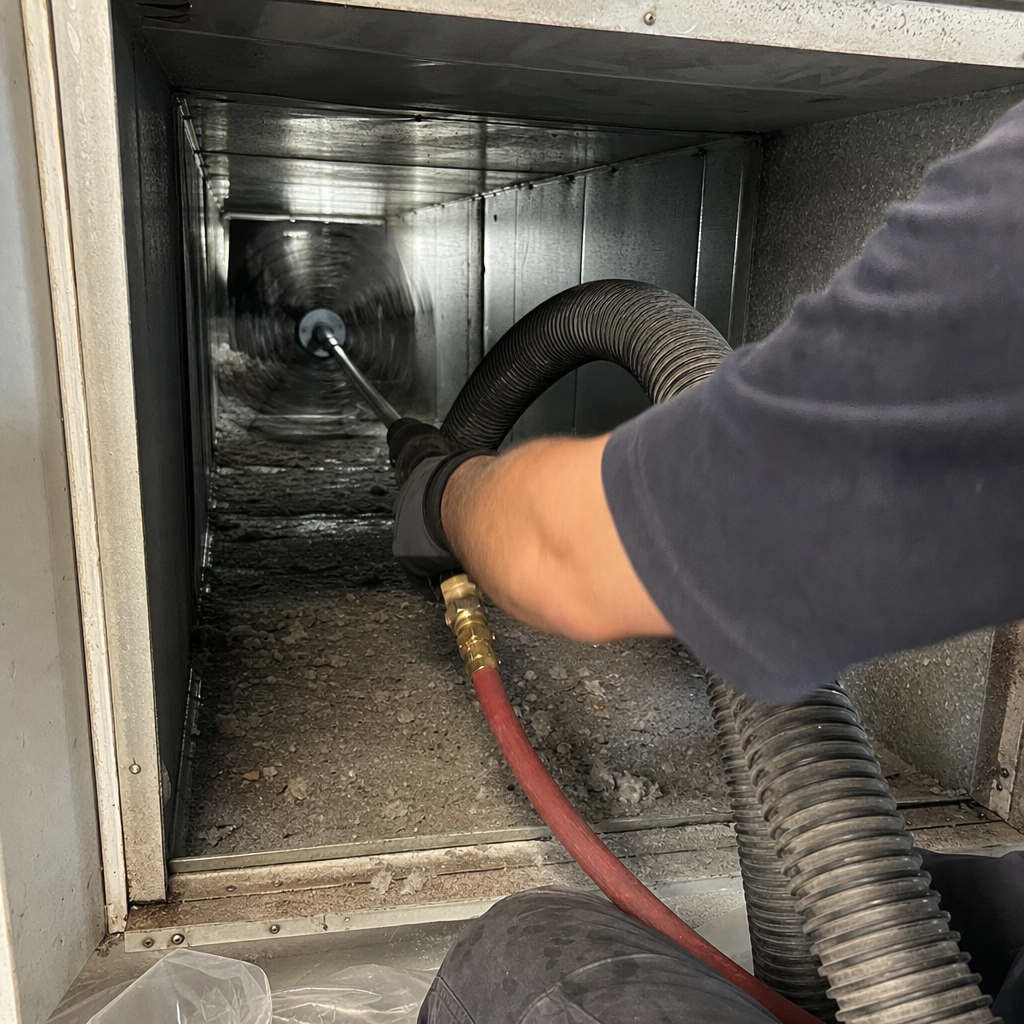
Older academic support buildings and some faculty homes on Stanford land still use galvanized steel ductwork. We repair corrosion damage, replace failed sections, and restore proper airflow without tearing out intact runs. When asbestos-containing duct insulation or tape is present — common pre-1980 — we coordinate abatement assessment before touching anything mechanical. That’s a compliance layer contractors working only in newer Palo Alto subdivisions rarely encounter, and it’s non-negotiable for us.
Flex Duct Repair
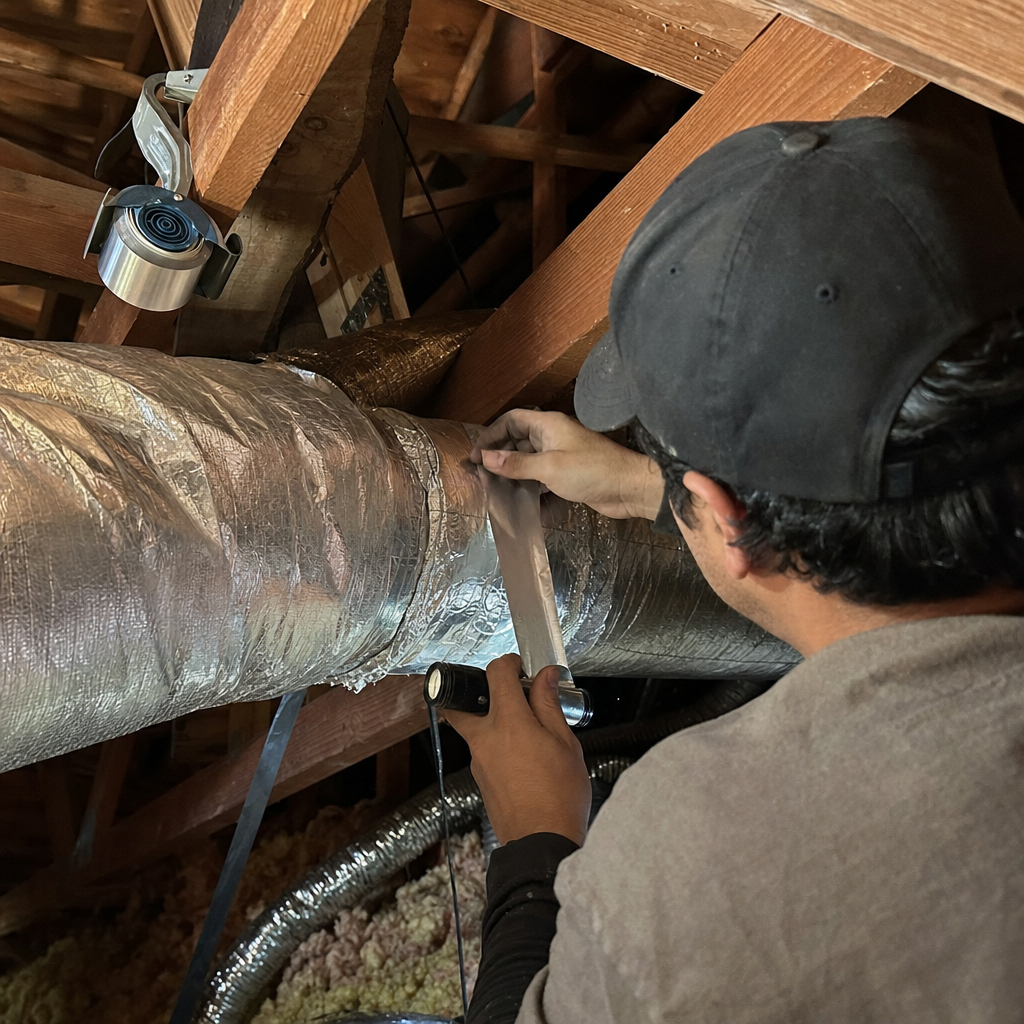
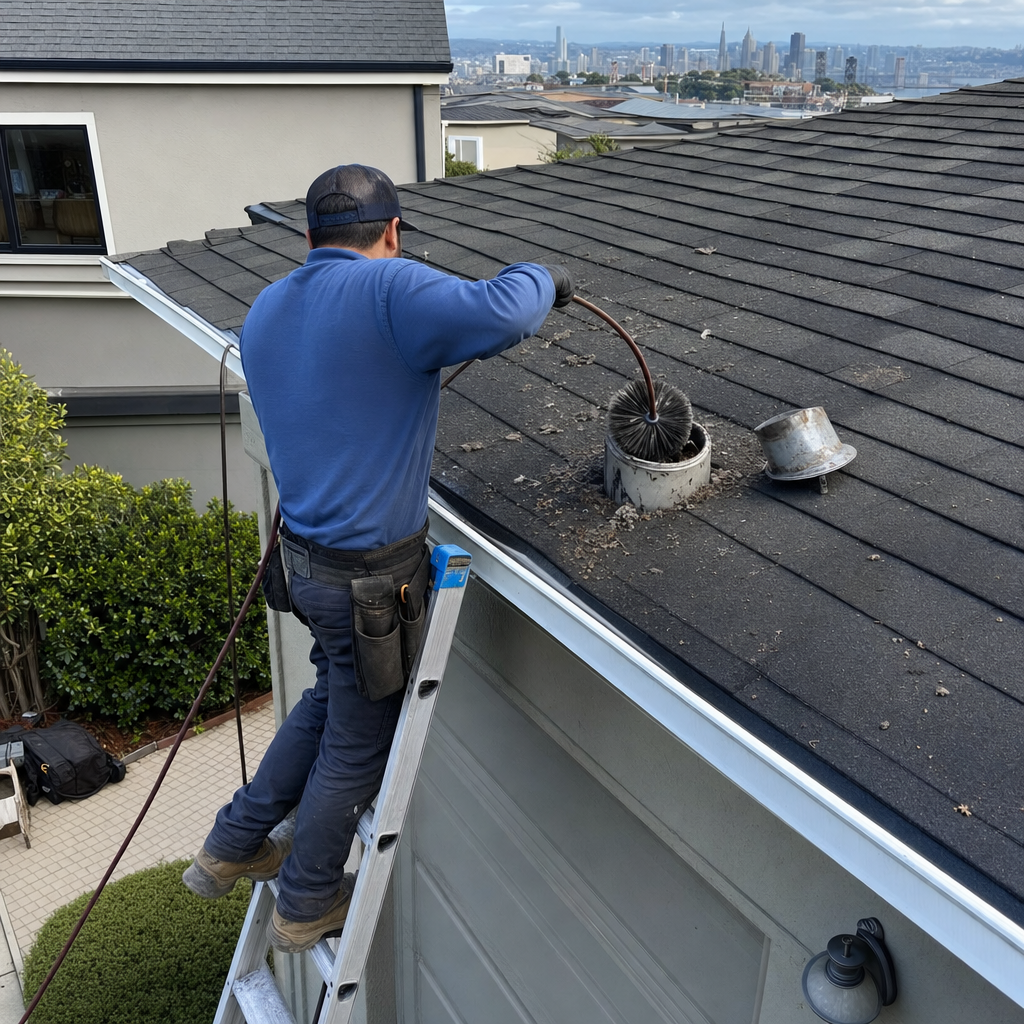
Flex duct is common in 1960s–1970s faculty housing and graduate complexes like Escondido Village. The plastic inner liner degrades, the insulation compresses, and the wire helix collapses at bends. We replace damaged sections with properly sized flex, support it to prevent sagging, and seal connections with mastic and mechanical bands. In Stanford’s damp winters, degraded flex duct becomes a microbial reservoir — we’ve pulled sections where the inner liner was black with growth from years of condensation.
Duct Insulation
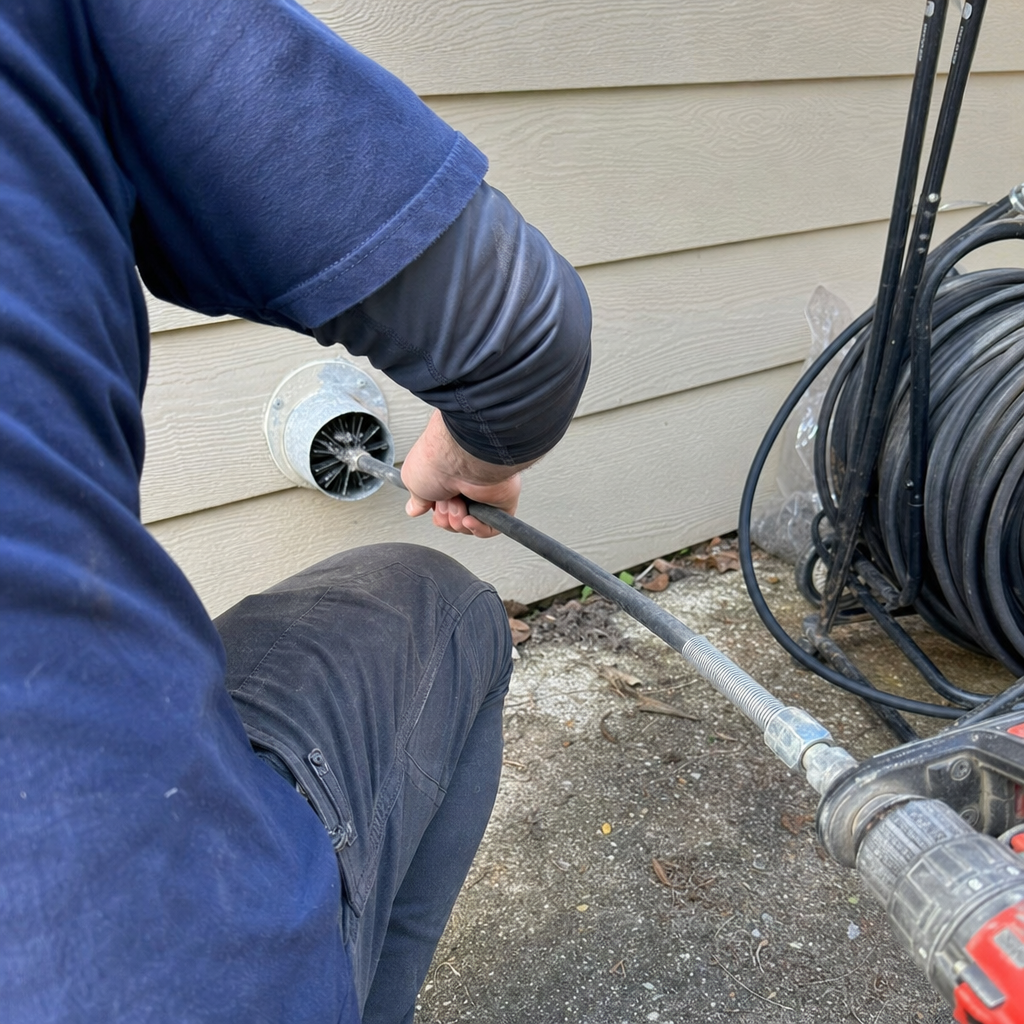
Uninsulated or degraded duct insulation in Stanford’s crawlspaces and attics means condensation, energy loss, and temperature swings at the register. We install new fiberglass or foil-faced insulation to current standards, with particular attention to the damp winter conditions that promote mold in under-insulated runs. For properties with asbestos-containing original insulation, abatement precedes any new installation.
What happens when you call
- 1
A real person answersNo phone trees — you reach a local pro.
- 2
You get an upfront price rangeHonest numbers before anyone is dispatched.
- 3
A background-checked tech heads outLicensed & insured, dispatched right away.
- 4
You approve before work beginsNothing starts until you say go.
Trusted Brands We Service in Stanford
We don’t show up with generic hardware. Our trucks carry Rotobrush and Nikro cleaning and repair equipment, Abatement Technologies HEPA containment for asbestos-sensitive jobs, and Honeywell and Aprilaire air quality components for integrated system upgrades. For sanitizing and protective treatments, we use Guardsman-grade products. We stock common flex duct sizes, mastic formulations, and mechanical fasteners specifically for the mid-century housing stock prevalent in Stanford’s 94305 ZIP code — meaning faster turnaround and fewer return trips for parts that don’t fit older systems.
Common Duct Repair & Sealing Problems We See in Stanford Homes
- Flex duct joints separate in uninsulated crawlspaces. Mid-century faculty homes built on piers or with minimal subfloor insulation experience wide temperature swings. The expansion and contraction loosens flex duct connections over time, and we find separated joints that have been blowing conditioned air into crawlspaces for years.
- Mastic sealant fails prematurely from coastal salt air. Metal duct connections near the campus perimeter — particularly in homes along Junipero Serra Boulevard and Alpine Road — show accelerated mastic degradation. The salt-laden onshore air penetrates crawlspace vents and attacks the polymer binders.
- Original duct board harbors microbial growth. Older bungalows and early faculty housing with original duct board develop black mold and bacterial colonies under the Bay Area’s persistent winter damp. The material itself becomes compromised, and sealing alone won’t restore integrity — section replacement is necessary.
- Asbestos-containing duct insulation blocks mechanical work. Pre-1980 properties may have asbestos paper wrap or tape on duct joints. We can’t cut, scrape, or disturb these materials without abatement assessment. This isn’t a corner to cut — it’s a legal and health requirement that we build into every Stanford estimate for older housing.
Pricing for Duct Repair & Sealing in Stanford, CA
Most duct sealing jobs in Stanford run $280–$450 for single-system residential work. Flex duct section replacement typically falls between $180–$340 per run, depending on accessibility. Metal duct repair with section replacement and resealing ranges $320–$650. Jobs requiring asbestos abatement assessment add $150–$400 for third-party testing and clearance, though many university-managed properties have existing asbestos surveys on file.
What moves the needle: crawlspace accessibility (tight spaces take longer), the extent of asbestos-containing materials, whether we’re coordinating with Stanford Facilities Operations for access, and how many duct runs need attention. We don’t quote over the phone for Stanford jobs without a site visit — the university-landlord context and potential abatement requirements demand eyes on the system. Estimates are free. Call (855) 908-0725 to schedule.
We Also Serve Cities Near Stanford
Our service radius covers the full Peninsula corridor. We regularly perform duct repair and sealing in Palo Alto — where the homeowner market differs sharply from Stanford’s university-managed properties — plus Atherton, East Palo Alto, and Los Altos Hills. Each city has distinct housing stock and duct configurations; we adjust our approach accordingly rather than applying a one-size template.
Serving Stanford, CA — Our Local Coverage Area
We’re based in the Stanford area and know this community well. Use the map below to see our service coverage — if you’re nearby, we can almost certainly help.
FAQs — Duct Repair & Sealing in Stanford
Yes. Stanford’s 94305 ZIP code is almost entirely university-owned land, so duct repair work in faculty housing typically requires coordination with Stanford Facilities Operations or housing management rather than individual homeowner discretion. We document our scope of work, materials, and timeline for university review, and we’ve navigated this process on multiple properties. Call (855) 908-0725 and we’ll walk you through the coordination steps — estimates are free.
Pre-1980 faculty homes and older academic buildings may contain asbestos paper wrap or tape on duct joints, which legally requires abatement assessment before any mechanical disturbance. We use Abatement Technologies containment and HEPA filtration when asbestos is suspected, and we coordinate certified testing before cutting or scraping. This compliance layer adds time and cost but protects occupants and workers — we don’t bypass it. For a specific assessment of your property’s asbestos status, call (855) 908-0725 for a free evaluation.
Pressure loss after sealing usually indicates an overlooked leak point — often in the return plenum, a disconnected trunk line in a crawlspace, or degraded flex duct that’s collapsing internally. In Stanford’s mid-century housing, we also find that original duct board has deteriorated to the point where sealing the joints won’t restore structural integrity. We pressure-test the full system to locate the remaining breach. Call (855) 908-0725 and we’ll diagnose it properly — estimates are free.
Duct sealing reduces pollen infiltration by closing leak points where unfiltered outdoor air enters the system, but it’s not a complete barrier without upgraded filtration. Stanford’s dense eucalyptus and coast live oak plantings generate heavy seasonal pollen loads that exploit even small gaps in ductwork. We recommend pairing sealing with a Honeywell or Aprilaire media filter upgrade for properties where allergen control is a priority. For a combined sealing and filtration assessment, call (855) 908-0725.
Yes, we service Escondido Village and other Stanford graduate housing complexes, working through the university’s housing management or Facilities Operations channel as required. These buildings typically use centralized or semi-centralized systems with flex duct distribution, and we’ve performed duct sealing and section replacement in multiple units. Coordination with building management for access is standard. Call (855) 908-0725 to discuss scheduling — estimates are free.
Written by Brian Rivera, Owner and Lead Technician at Northstar Air Duct Cleaning Service San Francisco, serving Stanford and the Peninsula since 2011.