
Fast, Reliable Duct Repair & Sealing Across Chinatown
Duct repair and sealing in Chinatown, CA typically runs $280–$650 for most residential jobs, with same-day service available when you call before noon. If your vents are pushing cooking odors, your energy bills are climbing, or you’re feeling weak airflow from rooms facing Stockton Street or Grant Avenue, there’s a good chance your duct seals have failed or your flex duct has corroded through.
We’re Northstar Air Duct Cleaning Service San Francisco, and our Duct Repair & Sealing team works Chinatown regularly — from the fourplexes above Grant Avenue restaurants to the walk-ups near Portsmouth Square. Brian Rivera, our owner and lead technician, has been crawling through the tight, irregular cavities of Chinatown’s post-1906 buildings for 14 years. We know the 94133 ZIP corridor’s specific problems: salt-air corrosion attacking metal seams, decades of grease migration from restaurant exhaust, and the chronic dampness that breaks down seals faster than anywhere else in San Francisco. Call (855) 908-0725 for a free estimate — we’ll show you exactly what’s failing and why.
Why Northstar Air Duct Cleaning Service San Francisco Is Chinatown’s Preferred Duct Repair & Sealing Company
Chinatown residents research before they book. They check review volume, not just star ratings. We’ve got 1,209 verified reviews averaging 4.9 stars — that’s a documented track record across real jobs, not a handful of hand-picked testimonials. When Brian Rivera arrives at your door on Stockton Street or Waverly Place, he’s the same person who owns the company and answers for the outcome.
Our response time to Chinatown averages under 90 minutes from call to arrival for scheduled appointments, and we carry mastic sealant, stainless steel clamps, and replacement flex duct sections in every van. No waiting for parts to cross the Bay. We’ve learned the building patterns here: the original plaster walls, the non-standard retrofit ducts crammed through 1920s framing, the shared chases that carry restaurant exhaust upward into residential units. That local knowledge saves hours on every job.
We’re not a generalist HVAC company that happens to do ducts on the side. We’ve spent 14 years focused exclusively on indoor air quality — cleaning, sealing, repairing, and sanitizing the air moving through your home. In Chinatown, that specialization matters more than most places.
Our Duct Repair & Sealing Services in Chinatown
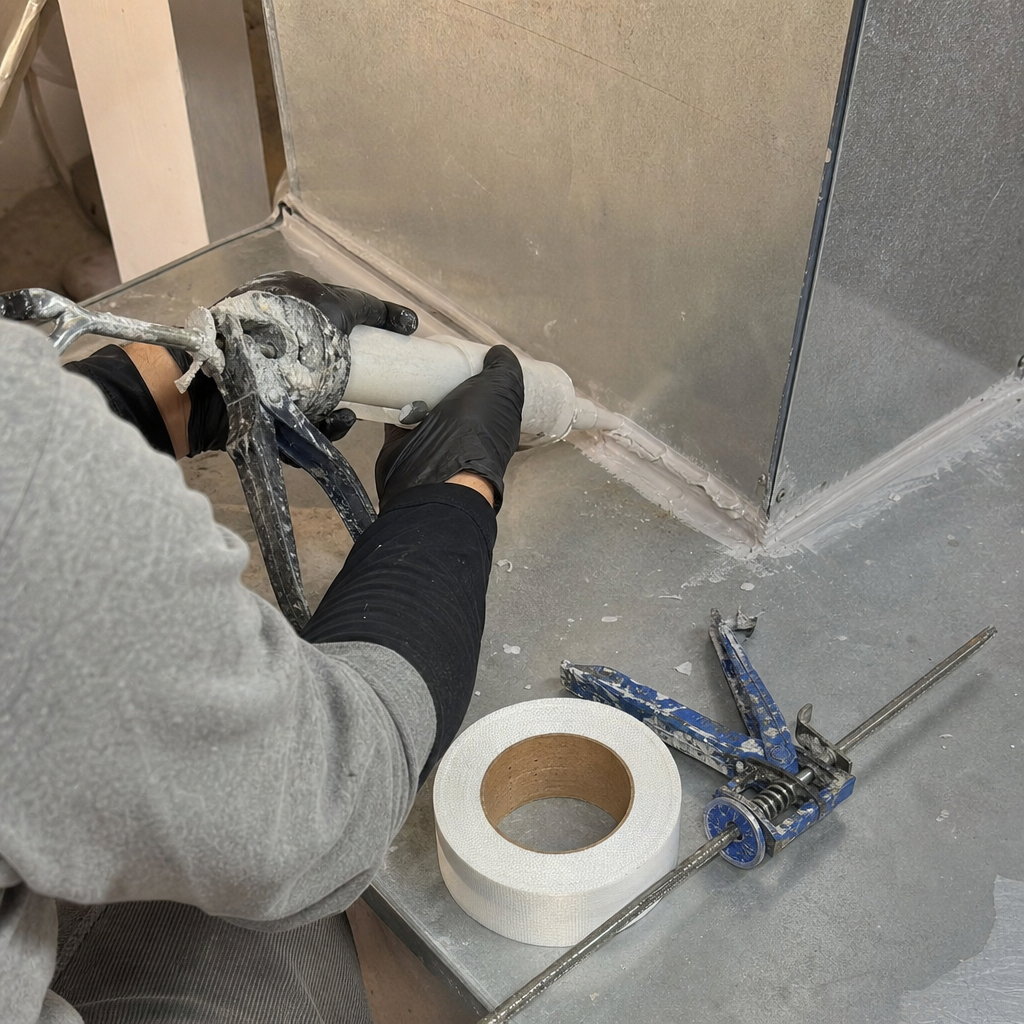
Duct Sealing with Mastic Sealant
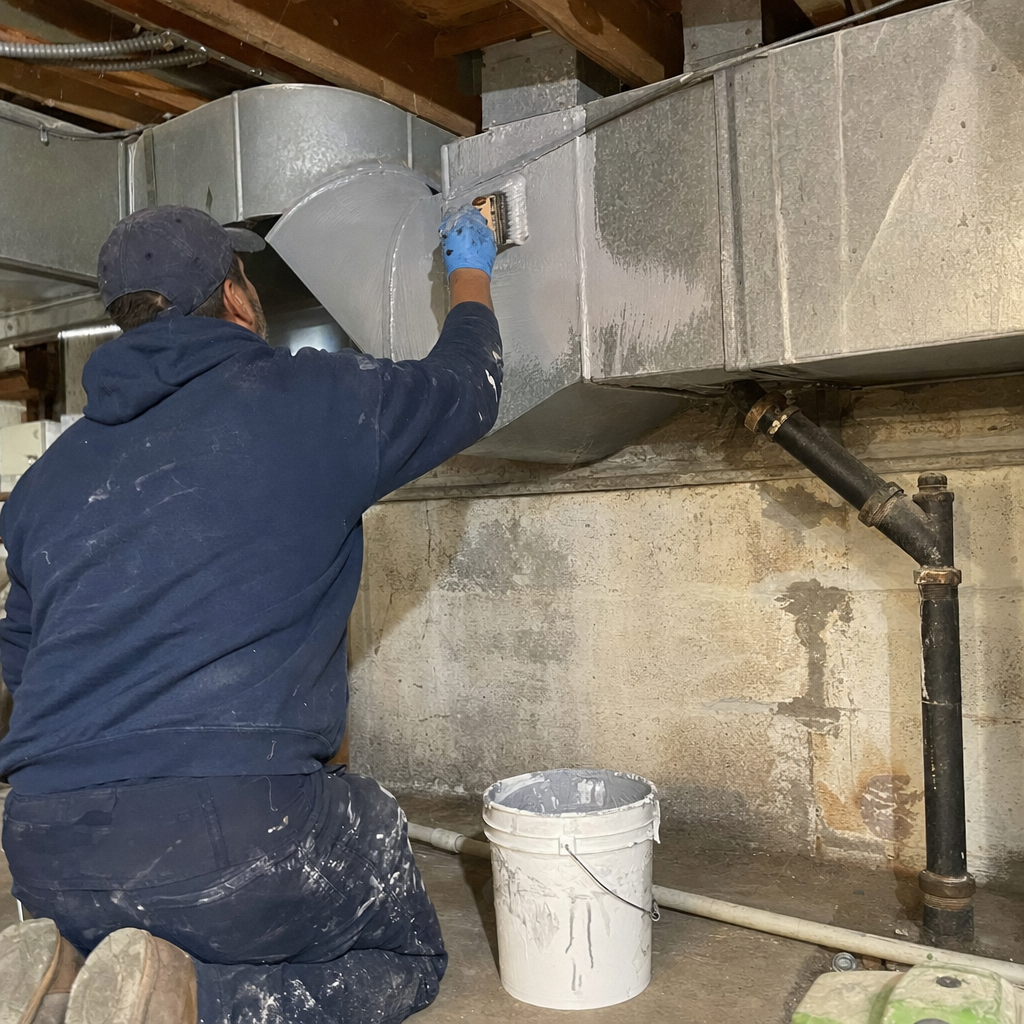
Mastic sealant is our go-to for Chinatown’s older metal ductwork because tape fails here. The marine-layer dampness inside unconditioned building cavities degrades standard duct tape within 18–24 months, and once moisture gets behind the adhesive, mold colonizes the gap. We apply fiber-reinforced mastic by hand to every seam and joint, creating a flexible, waterproof bond that withstands the 94133 corridor’s chronic condensation. On a recent job above a Jackson Street restaurant, we sealed 34 linear feet of galvanized trunk line where salt corrosion had opened pinhole leaks — the tenant’s PG&E bill dropped 22% the following month.
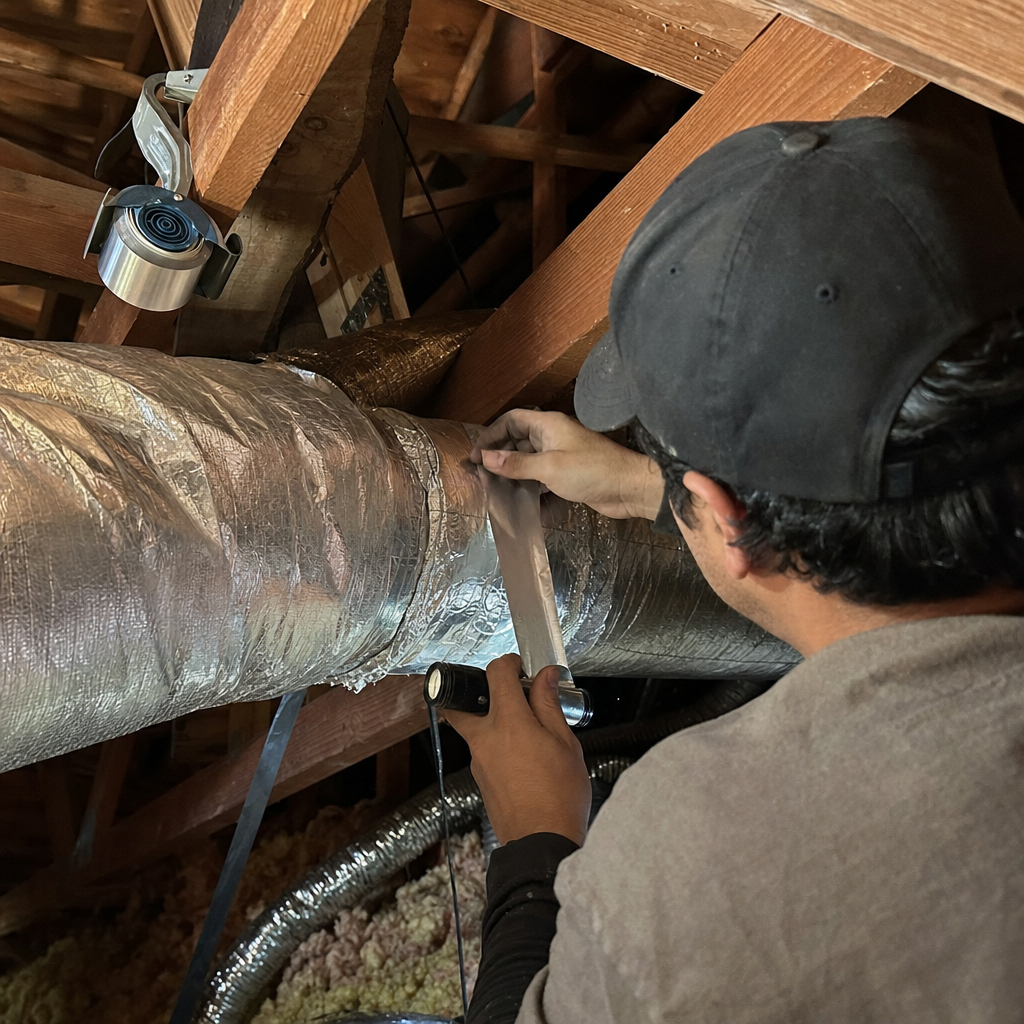
Flex Duct Repair
Flex duct in Chinatown takes a beating that flex duct in Noe Valley doesn’t. The grease-laden particulates from decades of restaurant exhaust migrate through shared wall chases and coat the inner lining of flex duct runs. That yellowish film breaks down the polyethylene liner, causing it to become brittle and crack. We don’t patch flex duct with tape and hope — we cut out compromised sections and replace them with new insulated flex, secured with stainless steel clamps (never standard galvanized, which the salt air attacks) and sealed with mastic at every connection. In buildings where the original flex was crammed through plaster walls during a 1980s HVAC retrofit, we often need to open small access panels to get clean runs — something a generalist crew rushing through won’t bother with.
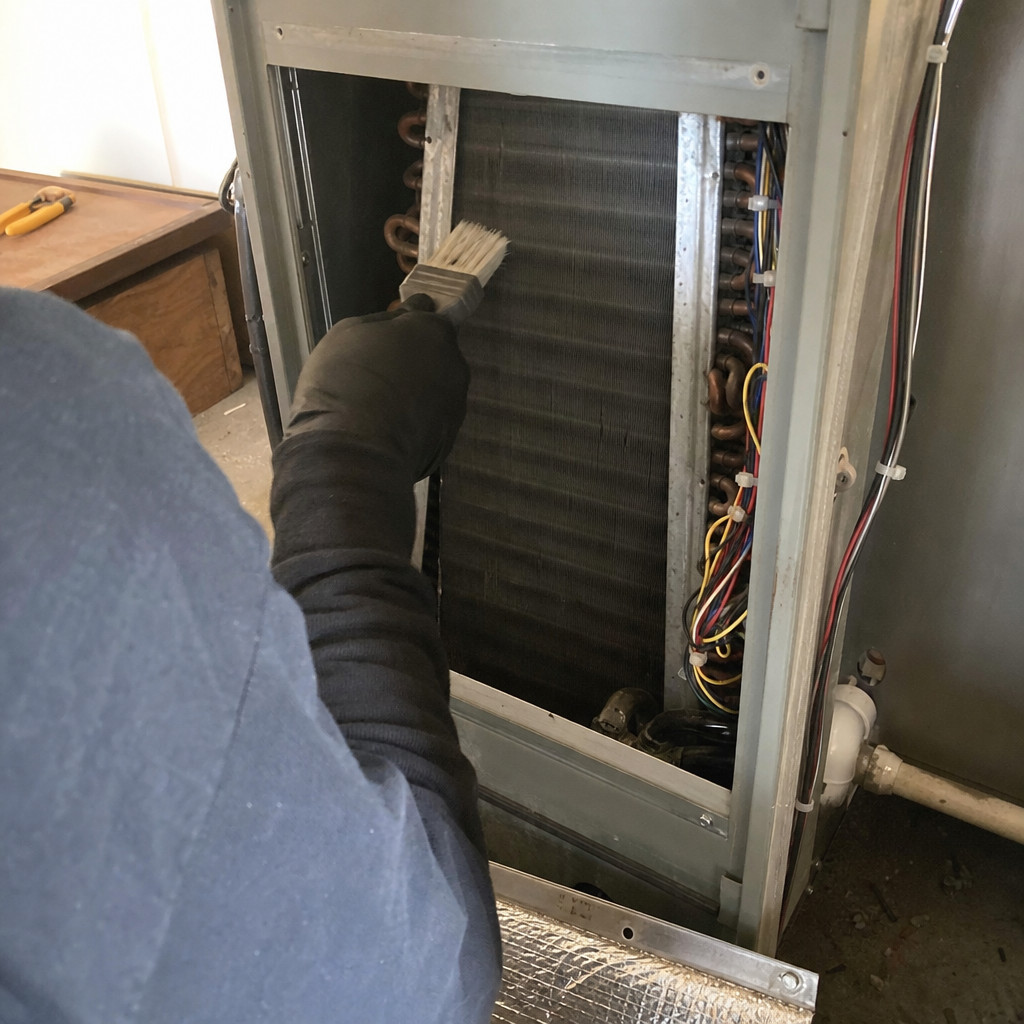
Metal Duct Repair
Chinatown’s metal ductwork — mostly galvanized steel retrofitted into post-1906 buildings — corrodes at the seams and screw holes faster than anywhere else we work in San Francisco. The combination of salt air infiltration and moisture from the marine layer creates electrochemical corrosion that eats through 30-gauge sheet metal in 3–5 years. Inland homes see 10+ years from the same material. We repair metal duct by cutting out corroded sections, fabricating replacement pieces from heavier 26-gauge galvanized or stainless steel where the budget allows, and sealing with two coats of mastic. For high-exposure runs near exterior walls facing the Bay, we’ll specify stainless steel screws and corrosion-resistant collars — the extra material cost pays for itself in longevity.
Duct Insulation
Uninsulated or degraded duct insulation is epidemic in Chinatown’s pre-war buildings. The original retrofit installers often skipped insulation entirely to fit ducts through tight cavities, or used fiberglass wraps that have since collapsed from moisture saturation. We install closed-cell foam insulation or foil-faced fiberglass wraps on supply runs, with particular attention to ducts passing through unconditioned spaces between floors — where the temperature differential creates condensation that drips through ceiling panels. In a Clay Street building last year, we reinsulated a main trunk that was sweating so heavily it had stained the plaster ceiling below. The moisture stopped. The mold smell stopped.
What happens when you call
- 1
A real person answersNo phone trees — you reach a local pro.
- 2
You get an upfront price rangeHonest numbers before anyone is dispatched.
- 3
A background-checked tech heads outLicensed & insured, dispatched right away.
- 4
You approve before work beginsNothing starts until you say go.
Trusted Brands We Service in Chinatown
We don’t show up with hardware-store tools and hope for the best. Our vans carry professional-grade equipment from Rotobrush, Nikro, and Abatement Technologies — the same tools used in commercial remediation jobs, deployed on your residential repair. For sealing and sanitizing applications, we stock Guardsman-grade treatment products and specify Honeywell and Aprilaire components when we’re integrating air quality solutions alongside your duct repair. We keep stainless steel clamps, mastic compound, and replacement flex duct in van stock specifically for Chinatown’s corrosion-prone conditions, so we’re not making a second trip while your kitchen smells like yesterday’s dim sum exhaust.
Common Duct Repair & Sealing Problems We See in Chinatown Homes
- Salt-air corrosion at metal seams and fasteners. The 94133 corridor’s exposure to Pacific salt air — accelerated by wind patterns through the Financial District canyon — corrodes galvanized duct seams and sheet metal screws within 3–5 years. Inland San Francisco neighborhoods see 10+ years from identical materials. We inspect for this specifically on every Chinatown job.
- Marine-layer dampness degrading seals. San Francisco’s cool, persistent marine layer keeps Chinatown’s temperatures mild, but chronic dampness inside unconditioned building cavities creates condensation that breaks down mastic and tape seals every 2 years or so. We use moisture-resistant sealing protocols and recommend insulation upgrades where this pattern repeats.
- Grease migration from restaurant exhaust. In Chinatown’s mixed-use buildings, duct repair jobs often reveal yellow grease residue from decades of restaurant exhaust seeping through shared wall chases — a contamination source most tenants don’t know about. This film degrades flex duct liners and contaminates indoor air. We identify the source, replace damaged sections, and seal chase penetrations to block further migration.
- Non-standard retrofit ductwork in pre-war structures. The vast majority of Chinatown’s residential buildings date from the post-1906 earthquake rebuilding period through the 1940s, meaning most structures are 80–120 years old and were never designed with central forced-air HVAC in mind. Duct systems were retrofitted into tight, irregular cavities — often with non-standard flex duct crammed through original plaster walls — making cleaning runs more technically demanding and debris accumulation far heavier than in purpose-built HVAC structures.
Pricing for Duct Repair & Sealing in Chinatown, CA
| Service | Typical Range in Chinatown |
|---|---|
| Mastic sealant re-sealing (standard residential system) | $280–$420 |
| Flex duct section replacement (per run) | $180–$340 |
| Metal duct corrosion repair (per section) | $320–$580 |
| Duct insulation replacement (per linear foot) | $12–$18 |
| Full system inspection with written report | $150–$200 (credited toward repair) |
What drives cost up in Chinatown specifically: access difficulty in tight retrofit cavities, corrosion mitigation requiring stainless hardware instead of standard galvanized, and grease-contaminated sections needing full replacement rather than patching. What keeps cost down: our van stock of common materials, our familiarity with local building patterns that speeds diagnosis, and our free estimate that tells you exactly what you’re paying for before work starts. Call (855) 908-0725 — estimates are free, and we’ll walk you through every line item.
We Also Serve Cities Near Chinatown
Our service radius covers all of San Francisco proper, including the Mission District, Noe Valley, and Visitacion Valley — each with their own ductwork challenges, from Mission’s warmer microclimate to Visitacion Valley’s hillside exposure. Wherever you are in the city, Brian Rivera handles your job personally with the same Rotobrush and Nikro equipment, the same 14 years of focused expertise, and the same 4.9-star accountability.
Serving Chinatown, CA — Our Local Coverage Area
We’re based in the Chinatown area and know this community well. Use the map below to see our service coverage — if you’re nearby, we can almost certainly help.
FAQs — Duct Repair & Sealing in Chinatown
Chinatown’s combination of salt-air corrosion, marine-layer moisture, and grease contamination degrades standard duct seals 2–3 times faster than inland conditions. The chronic dampness inside unconditioned building cavities breaks down tape adhesives and causes mastic to crack, while salt accelerates metal seam corrosion that opens new leak paths. We use marine-grade sealing protocols with stainless hardware and fiber-reinforced mastic formulated for high-moisture environments — call (855) 908-0725 for an inspection and we’ll show you exactly where your current seals are failing.
Yes, and this is one of the most common calls we get in Chinatown’s mixed-use buildings. On a Stockton Street fourplex, we sealed flex duct joints that were coated in a sticky grease film from the ground-floor dim sum operation. Using mastic sealant and stainless steel clamps from our van stock, we stopped the persistent cooking-odor drift into the upstairs bedrooms — a fix that required a corrosion-mitigation step because the salt air had weakened the original crimped connectors. Full replacement of grease-degraded flex sections is often necessary; patching over contaminated liner just delays the problem. Call (855) 908-0725 for a free assessment.
Yes, and pre-war buildings are where we do most of our insulation work in the 94133 ZIP. The original HVAC retrofits often skipped insulation to fit ducts through tight cavities, or used fiberglass that has since collapsed from moisture. We install closed-cell foam or foil-faced fiberglass wraps with careful attention to fire-rated assemblies required in multi-unit buildings. Access is always the challenge in 1920s framing — we’ve developed techniques to work through existing chases and small openings without unnecessary wall damage. Call (855) 908-0725 to discuss your building specifically.
Proper duct sealing will stop odor migration through your duct system itself, but if the smell is entering through shared wall chases, building envelope gaps, or exhaust backdrafting, sealing alone may not fully solve it. We identify the actual pathway during our inspection — sometimes it’s a failed duct seal, sometimes it’s a chase penetration that needs blocking, sometimes both. In the Stockton Street job mentioned above, mastic sealing plus chase blocking stopped the odor completely. Call (855) 908-0725 and we’ll trace the source accurately before recommending a fix.
We recommend inspection every 2–3 years for Chinatown buildings with exposed metal ductwork, and every 3–4 years for fully interior runs. Salt-air corrosion accelerates dramatically where ducts pass near exterior walls or roof cavities with any ventilation path. Early signs we look for: white powdery corrosion at screw heads, pinhole leaks at seams, and mastic that’s cracking or separating from metal. Catching corrosion at the surface stage means resealing; waiting until holes open means section replacement. We offer free estimates — call (855) 908-0725 to schedule.
Ready to stop the leaks, odors, and energy waste? Call Northstar Air Duct Cleaning Service San Francisco at (855) 908-0725 for your free estimate. Brian Rivera will inspect your system personally, explain exactly what’s failing and why, and give you upfront pricing with no pressure. Same-day appointments available across Chinatown and the 94133 corridor when you call before noon.
Written by Brian Rivera, Owner at Northstar Air Duct Cleaning Service San Francisco, serving Chinatown and San Francisco since 2010.