
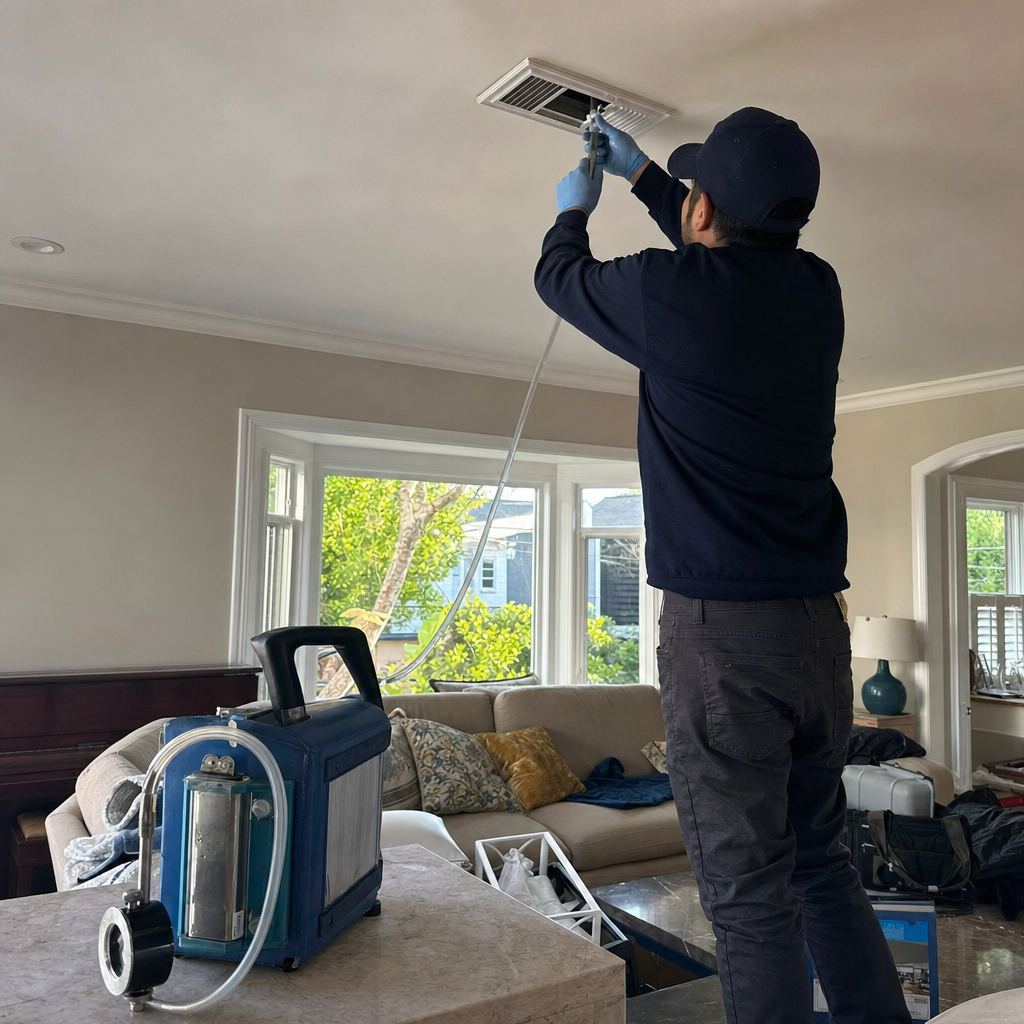
Fast, Reliable Air Quality & Sanitizing Across Stanford
Air quality and sanitizing service in Stanford, CA typically costs $280–$650 for residential duct treatment and $180–$420 for targeted mold or odor remediation, with most jobs completed in a single visit. We’re based in San Francisco and regularly serve Stanford’s 94305 ZIP code — usually arriving within 45 minutes to an hour for scheduled appointments. Call (855) 908-0725 for a free estimate.
Stanford’s housing stock isn’t like neighboring Palo Alto’s. The 94305 ZIP covers almost entirely university-owned land — faculty homes on Salvatierra Walk and Lasuen Mall, graduate complexes like Escondido Village, and academic support buildings. That means when we’re called to treat mold in a 1960s faculty bungalow or install UV lights in a research facility, we’re working with Stanford Facilities Operations procurement protocols, not standard homeowner requests. We’ve navigated that process for 14 years. Brian Rivera — owner and lead technician — handles your job personally, bringing Rotobrush and Nikro equipment that generalist HVAC crews simply don’t carry.
Why Northstar Air Duct Cleaning Service San Francisco Is Stanford’s Preferred Air Quality & Sanitizing Company
We’ve built our reputation in Stanford through repeat engagement with university housing management and the faculty who’ve referred us across departments. Our Air Quality & Sanitizing team understands the institutional approval chains that slow down outside contractors unfamiliar with Stanford’s system.
Our numbers: 1,209 verified reviews averaging 4.9 stars. That’s not a marketing figure — it’s a track record built across 14 years focused exclusively on indoor air quality, not duct cleaning as a side offering. Stanford clients find us because they research before booking, and review volume matters as much as star ratings.
Response time to Stanford runs 45–60 minutes from our San Francisco base. We know the campus loop, the faculty housing clusters off Campus Drive, and the service access points that trip up first-time contractors. Brian Rivera serves as lead technician on every job — not dispatched labor. The person with 14 years of specialized experience is physically in your ductwork, not managing from an office.
Local knowledge that matters here: we recognize asbestos-containing duct insulation and mastic common in pre-1980 Stanford construction. Generalists from newer Menlo Park subdivisions miss this. We flag it, coordinate abatement assessment, and proceed safely.
Our Air Quality & Sanitizing Services in Stanford
Mold Treatment
Stanford’s mid-century faculty homes and graduate housing complexes trap moisture. Original flex duct and duct board from the 1950s–1970s degrades, creating pockets where mold colonizes during damp Bay Area winters. We recently treated mold in the original flex duct of a 1960s faculty home on Salvatierra Walk. The occupant reported a musty smell after winter rains; our Rotobrush system removed heavy microbial buildup from decades of mild, damp conditions. For active infestations, we apply Guardsman-grade treatments after mechanical cleaning, with post-treatment verification.
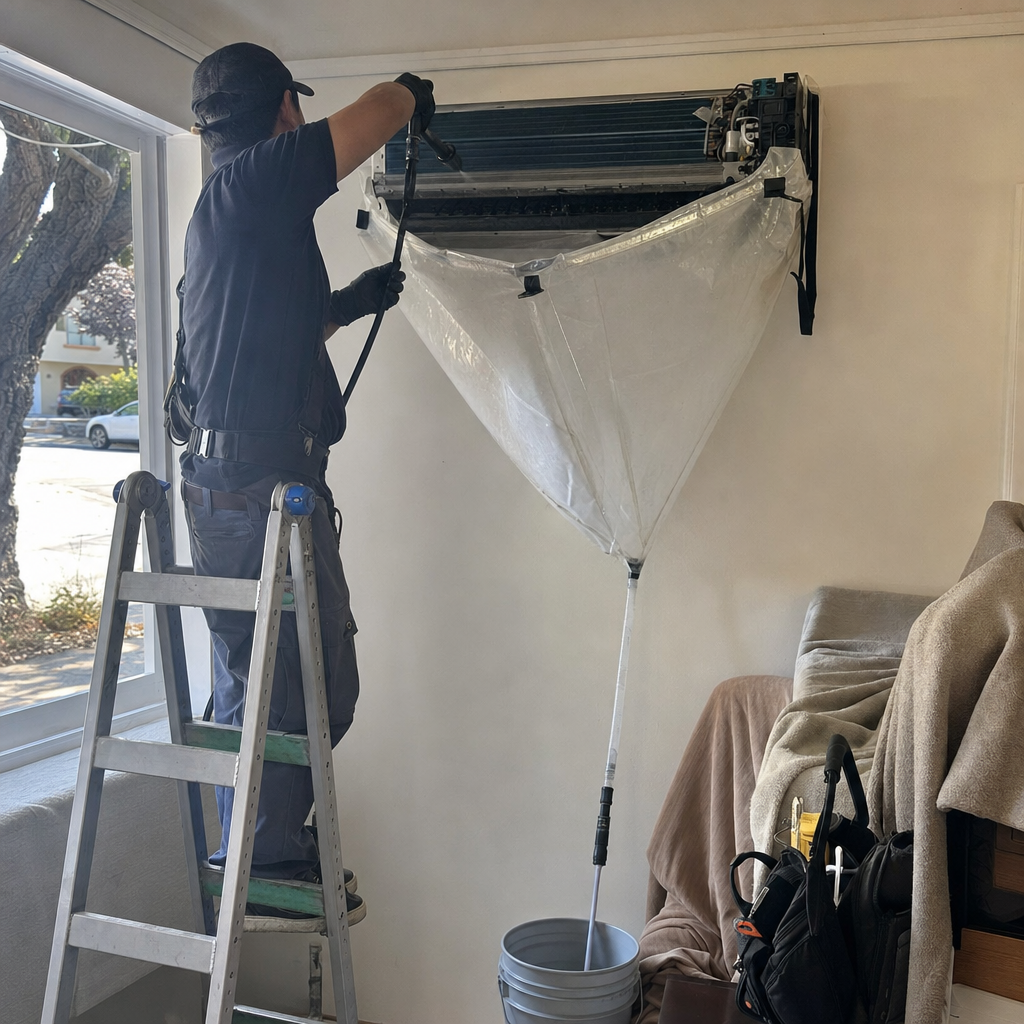
Bacteria Sanitizing
Multi-unit graduate housing in Escondido Village and other Stanford complexes see continuous occupancy turnover. Shared HVAC systems circulate bacterial loads between units, especially where original filtration is minimal. Our Abatement Technologies HEPA-negative air systems contain contaminants during service, followed by targeted sanitizing with EPA-registered products. We coordinate with Stanford Housing to schedule around academic calendars and minimize disruption.
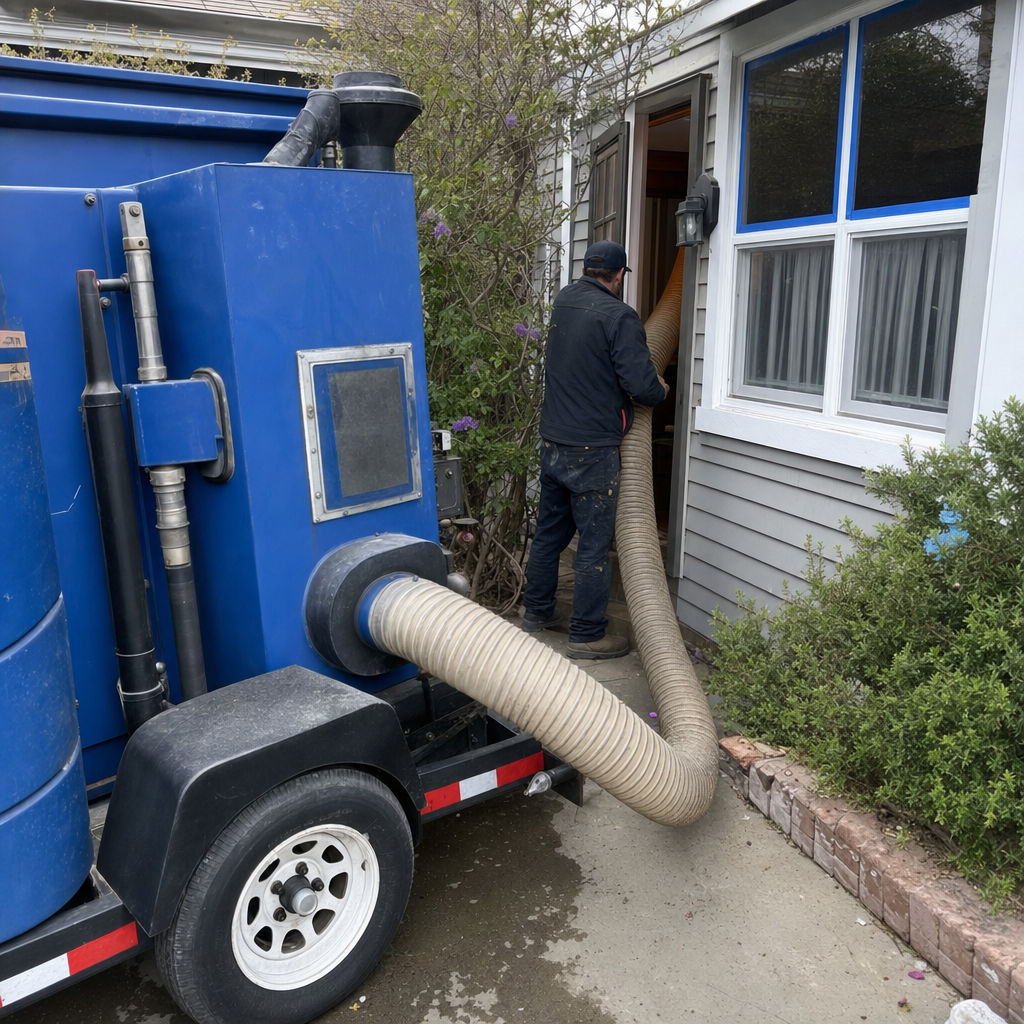
Odor Removal
Musty, stale, or chemical odors in Stanford’s older buildings often originate in degraded duct board insulation — material that absorbs and re-releases odor molecules for years. Surface cleaning doesn’t reach it. We assess whether the duct board can be salvaged through deep mechanical cleaning and encapsulation, or whether section replacement is the honest recommendation. Either way, we tell you upfront, not after three failed treatments.
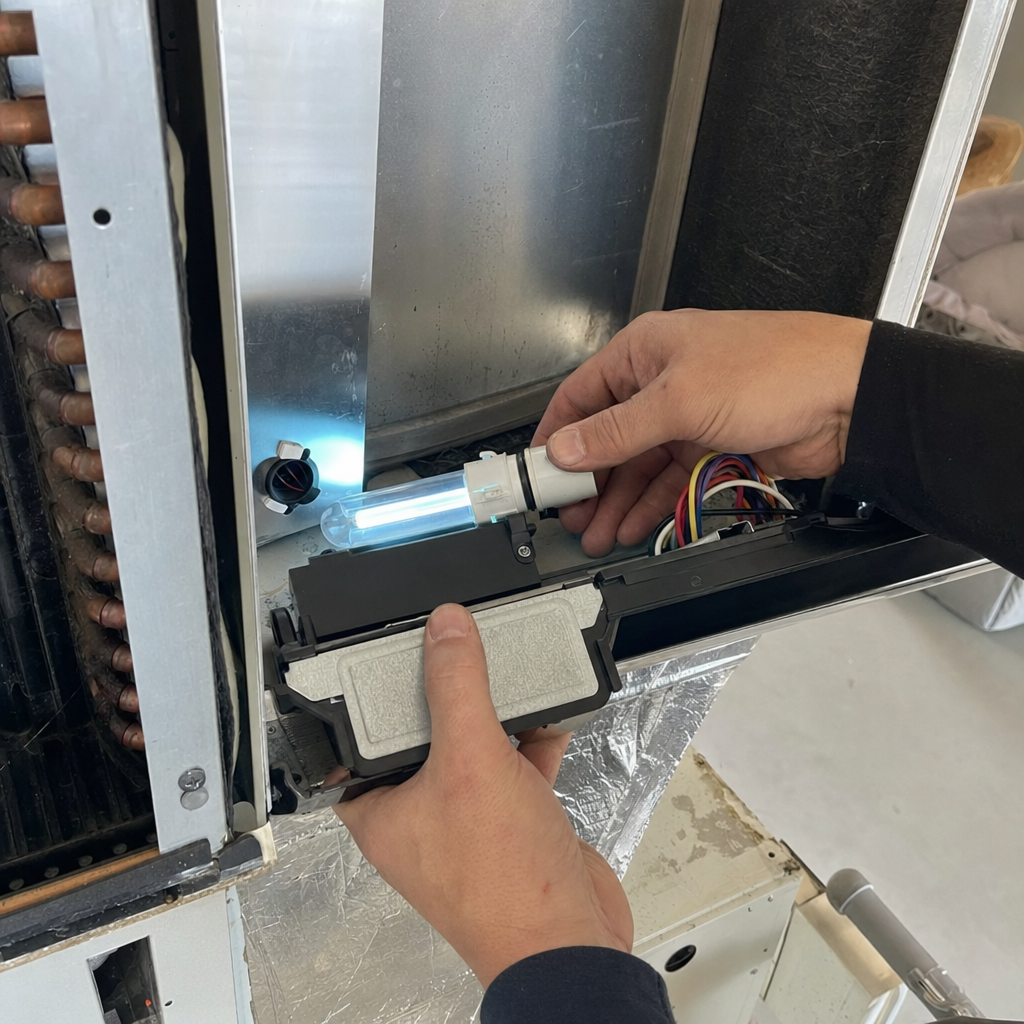
UV Light Installation
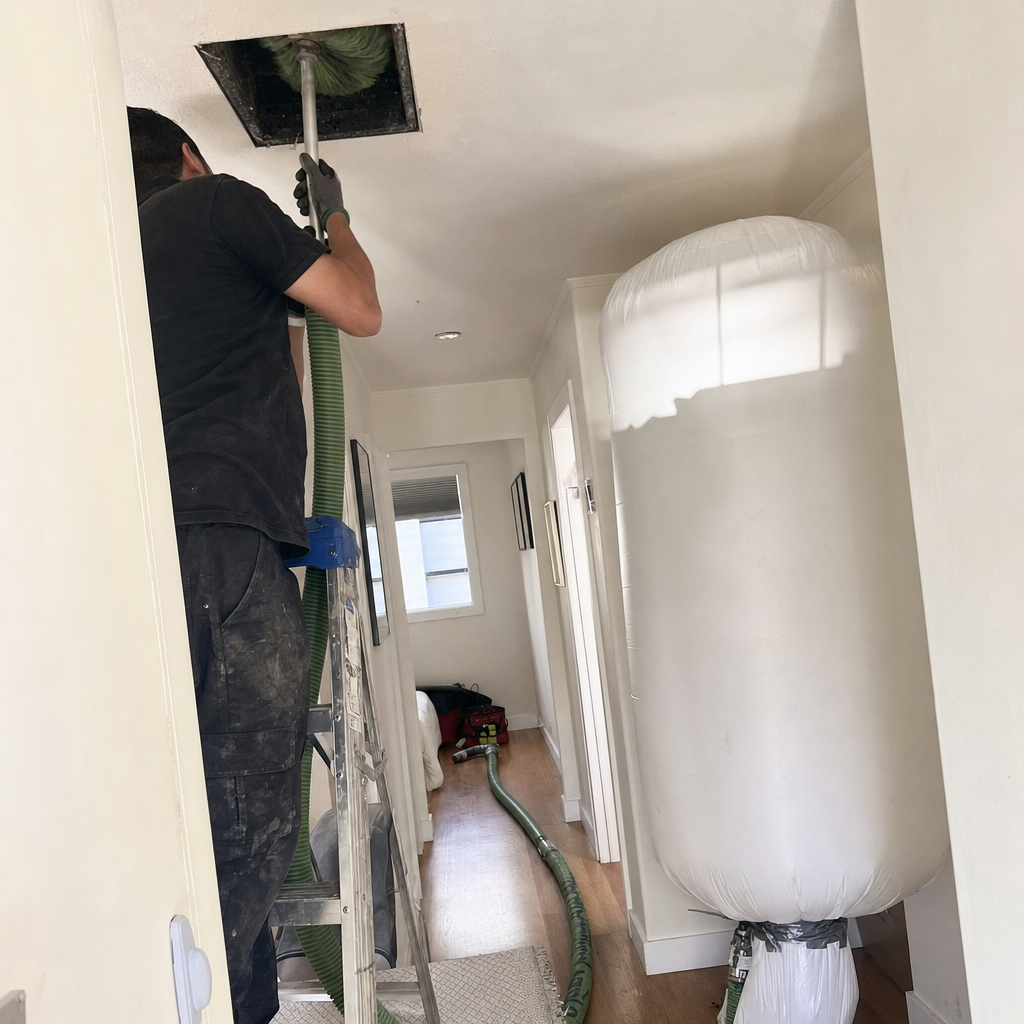
UV-C lamp installation targets biological growth at the HVAC coil and drain pan — critical in Stanford’s older systems where condensate management is marginal. We specify Honeywell and Aprilaire UV products sized to your system’s airflow, not generic over-the-counter units. For university-managed properties, we provide the documentation Stanford Facilities requires for equipment approval.
Air Purifier Installation
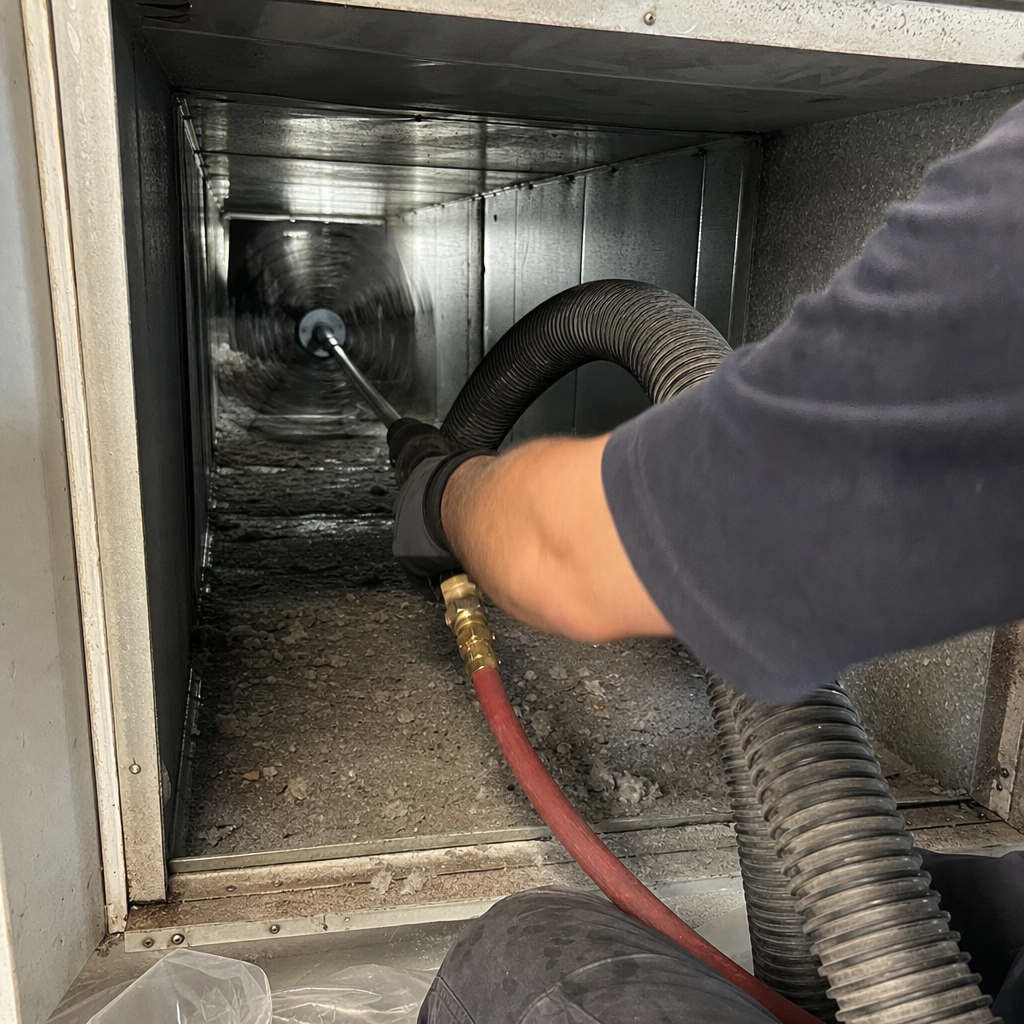
Whole-home air purifiers with MERV-16 or HEPA-grade media address what Stanford’s campus pollen loads overwhelm in standard filtration. Eucalyptus groves and coast live oaks release massive seasonal particulate; older faculty homes with 1-inch filter slots can’t handle it. We install Aprilaire and Honeywell cabinet systems with proper static-pressure calculations for existing ductwork.
Allergen Reduction
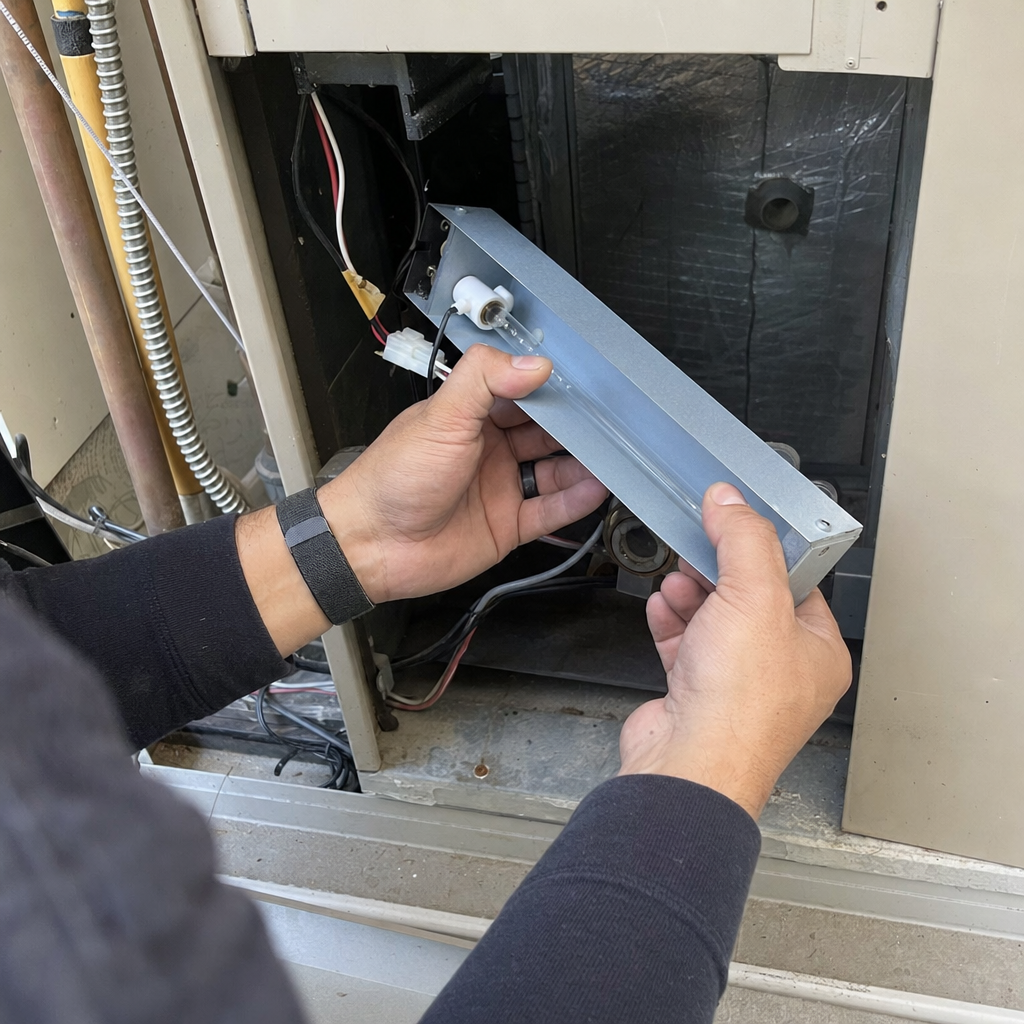
Stanford’s campus sits at the base of the Santa Cruz Mountains foothills, receiving heavy seasonal pollen from densely planted eucalyptus groves, native coast live oaks, and ornamental campus trees. These particulates infiltrate residential duct systems with minimal filtration in older housing stock. Dry, rain-free summers from May through October allow dust and organic debris to accumulate undisturbed. Our allergen reduction protocol combines mechanical agitation with Rotobrush and Nikro equipment, HEPA containment, and post-cleaning filtration upgrades.
What happens when you call
- 1
A real person answersNo phone trees — you reach a local pro.
- 2
You get an upfront price rangeHonest numbers before anyone is dispatched.
- 3
A background-checked tech heads outLicensed & insured, dispatched right away.
- 4
You approve before work beginsNothing starts until you say go.
Trusted Brands We Service in Stanford
We deploy professional-grade equipment that generalist HVAC companies don’t stock: Rotobrush and Nikro for mechanical duct cleaning, Abatement Technologies for containment and HEPA filtration, and Honeywell and Aprilaire for air quality hardware installation. For sanitizing and protective treatments, we use Guardsman-grade products. We maintain local parts inventory for fast turnaround on Stanford jobs — no waiting for Bay Area supply house shipments that delay university maintenance windows.
Common Air Quality & Sanitizing Problems We See in Stanford Homes
- Mid-century duct board or flex duct degrades with microbial buildup. Original materials in 1950s–1970s faculty homes break down under damp winter conditions, creating ideal environments for mold and bacteria. We assess structural integrity before cleaning and recommend replacement when repair is no longer cost-effective.
- Campus pollen loads overwhelm minimal filtration. Stanford’s eucalyptus groves and coast live oaks release seasonal particulate that accumulates in ducts with 1-inch filters or no filtration at all. Older homes near the Arboretum or Lake Lagunita are particularly affected.
- Pre-1980 ducts may contain asbestos insulation or mastic. This is a known hazard in Stanford’s construction era, requiring abatement assessment before any mechanical cleaning. Contractors working only in newer Palo Alto subdivisions rarely encounter this compliance layer.
- Institutional procurement delays outside contractors unfamiliar with Stanford’s system. We know the Facilities Operations process, the required documentation, and the housing management contacts that expedite approval for duct cleaning in university-owned properties.
Pricing for Air Quality & Sanitizing in Stanford, CA
| Service | Typical Range in Stanford |
|---|---|
| Mold treatment (ductwork, single zone) | $320–$580 |
| Bacteria sanitizing (whole system) | $280–$450 |
| Odor removal with duct board assessment | $240–$520 |
| UV light installation (coil/pan) | $380–$650 |
| Air purifier installation (whole-home) | $850–$1,800 |
| Allergen reduction (deep cleaning + filtration upgrade) | $420–$720 |
Stanford pricing reflects the specialized nature of university-managed properties: asbestos assessment when needed, coordination with Facilities Operations, and equipment sized for older, often degraded duct systems. Jobs in conventional Palo Alto homes typically run 10–15% lower because they skip these compliance and assessment layers. We provide exact quotes after inspection — estimates are free, and we don’t pressure for add-ons. Call (855) 908-0725 to schedule.
We Also Serve Cities Near Stanford
Our service radius covers Palo Alto to the north, Atherton and Los Altos Hills to the west, and East Palo Alto to the northeast. Each market differs: Palo Alto’s conventional homeowner market, Atherton’s estate properties with custom HVAC, East Palo Alto’s newer construction with different failure modes. We adjust our approach accordingly, but bring the same owner-led accountability and professional-grade equipment to every job.
Serving Stanford, CA — Our Local Coverage Area
We’re based in the Stanford area and know this community well. Use the map below to see our service coverage — if you’re nearby, we can almost certainly help.
FAQs — Air Quality & Sanitizing in Stanford
No — mechanical cleaning cannot proceed until abatement clearance is documented. We coordinate with certified abatement contractors, then schedule cleaning post-clearance. This is standard for pre-1980 Stanford construction; we’ve managed this sequence multiple times for Faculty Staff Housing. Call (855) 908-0725 to discuss your property’s timeline.
UV installations in graduate housing require Stanford Housing approval and typically must be performed by or coordinated through Facilities Operations. We provide the equipment specifications, electrical load calculations, and warranty documentation required for their review. Individual leaseholders cannot authorize independent HVAC modifications.
Stanford’s eucalyptus groves create peak pollen loads in late spring through early summer, with secondary peaks from coast live oak in early spring. Homes with original 1-inch filter slots or missing filtration should schedule cleaning every 2–3 years versus the 4–5 year standard for newer construction with MERV-13+ systems. We assess your actual debris load during inspection and recommend honestly — not on a fixed schedule.
Degraded flex duct cannot be cleaned effectively — mechanical agitation destroys it further. We inspect with camera first. If the inner liner is compromised, we quote section replacement with modern insulated flex or rigid duct, sealed to current standards. For university-owned properties, we document the condition for Facilities Operations and coordinate their preferred replacement contractors if required.
Sometimes — if the duct board structure is intact, deep mechanical cleaning with Rotobrush agitation and encapsulation treatment can seal odor-absorbed fibers. If the board is crumbling or saturated, replacement is the only permanent solution. We’ve treated original duct board in early-expansion-era bungalows near Governor’s Corner with mixed results; we tell you the realistic outcome before starting, not after your money’s spent.
Ready to improve the air moving through your Stanford property? Brian Rivera — owner and lead technician — handles your job personally, with 14 years of focused experience and the equipment to match. Call (855) 908-0725 for a free estimate. We’ll inspect, quote honestly, and get it done right.
Written by Brian Rivera, Owner at Northstar Air Duct Cleaning Service San Francisco, serving Stanford since 2010.