
Quick Summary
In dense mixed-use environments, commercial cooking grease and ambient humidity accumulate on evaporator and condenser fins, making professional hvac coil cleaning in Chinatown essential for restoring restricted airflow and lowering energy strain. Northstar Air Duct Cleaning Service San Francisco addresses these unique building layouts by deploying low-pressure foaming detergents and multi-stage containment protocols that dissolve sticky deposits and biofilm without damaging delicate coil fins. After reading, property managers and homeowners will understand the warning signs of coil fouling, pricing factors, and maintenance schedules, enabling them to contact Northstar Air Duct Cleaning Service San Francisco 24/7 for a free written estimate.
How HVAC Coil Cleaning Restores Airflow and System Efficiency
When air vents start blowing weak or warm air, dirty evaporator and condenser coils are often the root cause. In dense urban settings such as San Francisco‘s Chinatown, heating and cooling equipment can face challenges when commercial kitchen grease mixes with ambient moisture and coastal air. Over time, this can create a sticky layer across aluminum coil fins that restricts air movement and increases strain on blower motors. General HVAC research shows that thorough coil cleaning improves airflow, reduces pressure drop, and helps restore system operating efficiency.[2]
Restoring these systems safely requires low-pressure foaming detergents and containment barriers rather than harsh pressure washers that can bend fragile fins. Property owners can consult qualified HVAC professionals, such as Northstar Air Duct Cleaning Service San Francisco, for detailed inspections and written estimates.
Quick Answer: Why Clean Your HVAC Coils?
Professional HVAC coil cleaning removes compacted grease, ambient soot, and biological growth from evaporator and condenser fins. Clearing this buildup lowers static pressure inside the air handler, prevents compressor strain, and supports efficient energy use. For mixed-use properties and commercial spaces, regular cleanings help maintain proper ventilation and reduce the risk of unexpected system downtime.
Why Mixed-Use Buildings Can Experience Severe Coil Fouling
Urban neighborhoods often feature multi-story, mixed-use properties with ground-floor commercial kitchens located beneath residential apartments or offices. This layout can create specific indoor air quality and mechanical maintenance challenges.
The Interaction of Cooking Residue and Environmental Humidity
Commercial cooking releases fine grease particles into the air. When airborne residues enter fresh-air intakes and combine with humid air, they can condense onto cool metal surfaces. While loose dust can often be vacuumed away, grease-laden deposits adhere firmly to aluminum fins.
Standard vacuums and surface sprays are often insufficient to break down gummy residues. HVAC studies demonstrate that cleaning fouled coils improves airflow and heat transfer. Specialized foaming detergents help dissolve bound deposits so technicians can wash them out without damaging delicate coil fins.[3]
Impact on Shared Vertical Ventilation Shafts
Many older buildings utilize vertical utility chases that carry ductwork and exhaust lines through multiple floors. When grease and moisture settle on evaporator coils inside tight enclosures, odors and biological growth can develop. According to Northstar Air Duct Cleaning Service San Francisco, cleaning shared systems requires careful containment protocols to prevent contaminants from entering occupied spaces during service.
What Factors Influence HVAC Coil Cleaning Costs?
Need hvac coil cleaning in Chinatown?
We’re available now — call for a fast, free estimate.
The cost of professional HVAC coil cleaning generally depends on equipment size, accessibility, and the level of buildup on the fins.
Service Scopes for Residential and Commercial Properties
Because property configurations vary from residential units to commercial spaces, cleaning scopes are typically tailored to the installation:
| Service Tier | Target Equipment | Grease and Grime Removal Method |
|---|---|---|
| Residential Split System | Standard indoor/outdoor units | Low-pressure foam penetration and rinse |
| Commercial / Mixed-Use | Multi-zone air handlers and rooftop units | Deep-penetrating chemical emulsification and wash |
| Sanitizing and Pan Treatment | Drain pans and internal surfaces | EPA-registered antimicrobial treatment |
| Exhaust and Dryer Vent Add-on | Dedicated exhaust runs | Mechanical rotary brush and HEPA extraction |
Key Pricing Variables
General industry research indicates that cleaning fouled cooling coils reduces pressure drop across the coil and improves heat-exchange efficiency.[4]
When preparing general estimates, technicians typically evaluate three primary variables:
- Buildup Severity: Heavy grease deposits require specialized emulsifying agents and longer dwell times than light dust accumulation.
- Physical Accessibility: Coils located in confined ceiling spaces, crawlspaces, or rooftop locations require additional setup time and safety precautions.
- System Design: Multi-tenant configurations may require negative air containment to protect occupied areas during service.
Professional service providers, such as Northstar Air Duct Cleaning Service San Francisco, generally offer upfront estimates to outline project requirements before work begins.
How Technicians Clean Evaporator and Condenser Coils Safely
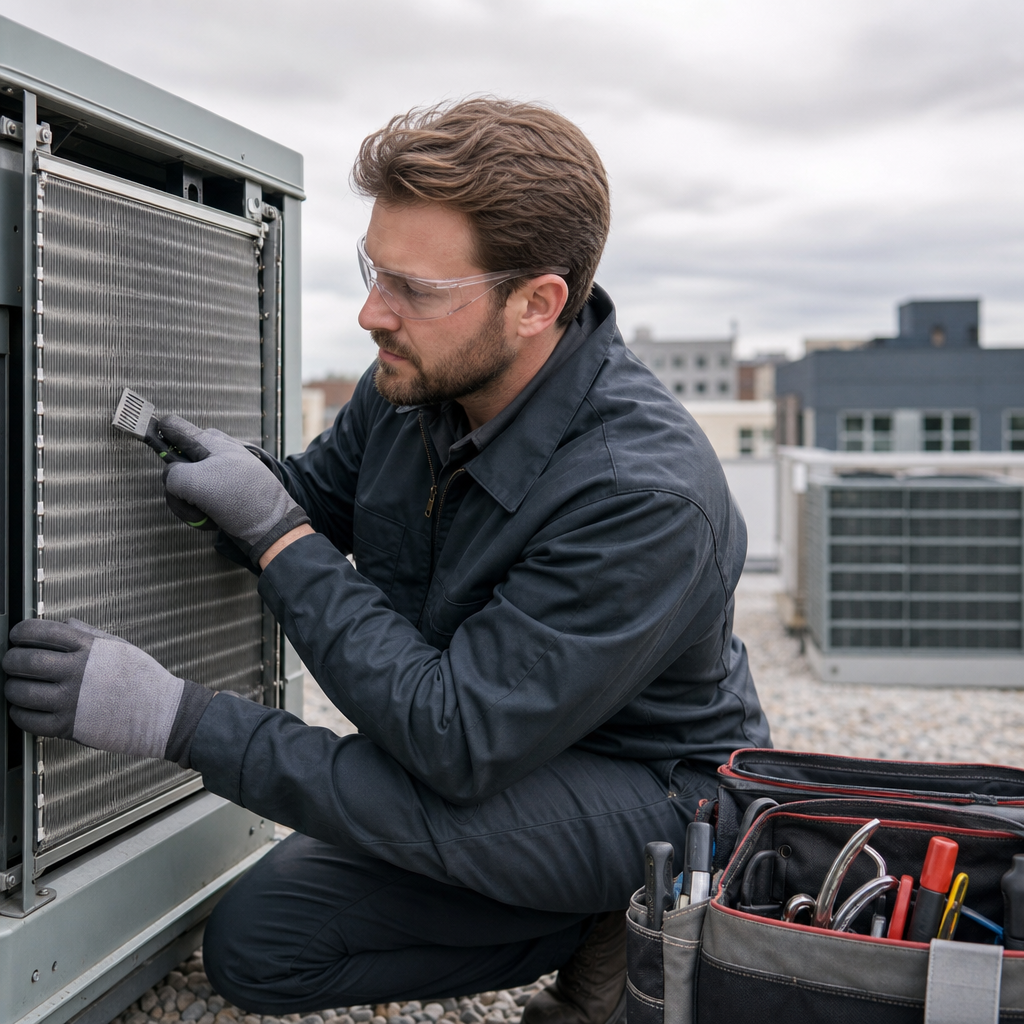
Trained technicians use low-pressure foaming cleaners and containment systems to protect surrounding structures while restoring heat-exchange surfaces.
Indoor Evaporator Coil Remediation
Technicians typically inspect the unit before completing a standard cleaning process:
- Containment Setup: Protective sheeting and collection bibs are placed around the indoor air handler to capture liquid runoff.
- Foam Application: Expanding foam is applied across the fin pack to penetrate deposits between the fins.
- Controlled Rinse: A low-pressure rinse washes away dissolved residues into collection containers to protect adjacent spaces.
HVAC industry research indicates that dirty evaporator coils increase overall system energy consumption and reduce thermal performance.[1]
Rooftop and Outdoor Condenser Coil Washing
Outdoor condenser units located on rooftops or near ground level collect soot, grease exhaust, and environmental debris. Technicians wash these coils from the inside out using controlled pressure to flush debris outward rather than packing it deeper between fins, helping prevent elevated head pressure.
Blower Assembly and Drain Pan Care
Coil cleaning is commonly paired with maintenance on related components:
- Cleaning blower wheel blades to support proper airflow balance.
- Clearing condensate drain lines to prevent blockages and overflow.
- Applying EPA-registered treatments to drain pans to reduce standing-water odors.
Warning Signs and Recommended Maintenance Schedules
To reduce the likelihood of equipment failure during high-demand periods, building operators should monitor systems for signs of restricted airflow.
Common Signs of Dirty HVAC Coils
- Unexplained increases in heating or cooling energy usage.
- Reduced airflow from supply registers during normal operation.
- Frost or ice forming along refrigerant lines or the evaporator coil face.
- Musty or stale odors when the blower operates.
General HVAC research shows that fouled outdoor condenser coils impair heat rejection and increase compressor workload. As specialists at Northstar Air Duct Cleaning Service San Francisco point out, routine cleaning helps protect system longevity.
Recommended Service Frequency
As a general guideline, commercial kitchens and properties located near heavy exhaust outlets benefit from inspections and cleaning every 3 to 6 months. Standard residential systems typically require inspection and service once per year, often in the spring before cooling demand increases.
Frequently Asked Questions
How much does HVAC coil cleaning typically cost?
Costs are generally estimated based on system type, ranging from baseline rates for single residential split systems to higher figures for large commercial air handlers. Final estimates depend on unit accessibility, equipment size, and the degree of fouling.
How often should HVAC evaporator and condenser coils be cleaned?
As a general maintenance guideline, residential systems are typically serviced annually, while facilities near commercial cooking or high exhaust levels may require service every 3 to 6 months to prevent heavy grease buildup.
What are the warning signs of dirty HVAC coils?
Common indicators include restricted airflow from vents, extended operating cycles, ice accumulation on refrigerant lines, stale odors, and higher energy costs.
Does dirty coil buildup increase energy bills?
Yes. When debris insulates heat-transfer surfaces, systems must run longer to satisfy temperature setpoints. Industry studies show that fouled coils lead to increased compressor and fan power demand.
What is included in commercial HVAC coil cleaning?
As outlined by Northstar Air Duct Cleaning Service San Francisco, commercial services typically include area containment, grease-cutting foaming applications, low-pressure rinsing, blower wheel cleaning, and drain pan treatments suited to facility schedules.
How long does a professional HVAC coil cleaning appointment take?
A standard residential coil cleaning generally takes between 1.5 and 3 hours. Larger commercial systems or units in confined utility chases may require 4 to 6 hours for full containment, cleaning, and rinse recovery.
Need hvac coil cleaning in Chinatown?
We’re available now — call for a fast, free estimate.
Sources
- Dirty Air Conditioners: Energy Implications of Coil Fouling – osti.gov
- 34 – citeseerx.ist.psu.edu
- How HVAC Cleaning Boosts Energy Efficiency and Airflow – nadca.com (2025)
- [PDF] How UV-C Can Reduce HVAC Energy – MSAPPA – msappa.appa.org (2009)
Hvac Coil Cleaning in Nearby Cities
We also serve the communities around Chinatown:
- Hvac Coil Cleaning in San Francisco
- Hvac Coil Cleaning in Burlingame
- Hvac Coil Cleaning in Daly City
- Hvac Coil Cleaning in El Granada
- Hvac Coil Cleaning in Half Moon Bay
- Hvac Coil Cleaning in Hillsborough
- Hvac Coil Cleaning in Millbrae
- Hvac Coil Cleaning in Mission District
Frequently Asked Questions
Why is high-pressure washing avoided during HVAC coil cleaning in Chinatown properties?
High-pressure water easily bends delicate aluminum coil fins and forces moisture into historic building cavities. Northstar Air Duct Cleaning Service San Francisco uses specialized low-pressure expanding foam detergents to dissolve stubborn cooking grease and biofilm without causing mechanical damage.
How are indoor spaces protected from grease and chemical runoff during coil cleaning?
Technicians deploy multi-stage containment barriers, protective sheeting, and specialized collection bibs around the air handler to capture all liquid runoff. Northstar Air Duct Cleaning Service San Francisco also utilizes negative air containment in mixed-use buildings to prevent chemical odors from entering occupied residential units.
How can property managers in Chinatown schedule an inspection and receive a service quote?
Property managers can call Northstar Air Duct Cleaning Service San Francisco on their 24/7 service line to request a free, detailed written estimate. Technicians evaluate system accessibility, grease buildup levels, and required containment setups before providing transparent upfront pricing.
About the author
 |
Sarah Miller Sarah is a certified HVAC technician with over 8 years of experience in residential air duct cleaning and maintenance. She specializes in improving indoor air quality for homeowners in the San Francisco Bay Area and holds an EPA Section 608 Certification. Her practical insights help families make informed decisions about their HVAC systems and dryer vents. |
Dusty vents or weak airflow at home?
We’re available now — call for a fast, free estimate.
Call Now - Free Estimate