


Fast, Reliable Air Duct Cleaning Across Stanford
Air duct cleaning in Stanford typically runs $380–$720 for a full residential system, with most jobs completed in a single visit. We handle everything from mid-century faculty homes on university-owned land to graduate housing complexes and campus research facilities. Call (855) 908-0725 for a free estimate.
We’re familiar with Stanford’s unique landscape — the eucalyptus-lined corridors off Palm Drive, the faculty housing clusters near Alvarado Row, the graduate apartments at Escondido Village. Brian Rivera — owner and lead technician — handles your job personally, bringing 14 years of focused air duct specialization and our Air Duct Cleaning team directly to your door. Unlike generalist HVAC companies that treat duct cleaning as a seasonal add-on, we’ve built our entire operation around the air moving through your home. That matters in Stanford, where university-managed properties, aging infrastructure, and heavy seasonal pollen create conditions that demand genuine expertise.
Why Northstar Air Duct Cleaning Service San Francisco Is Stanford’s Preferred Air Duct Cleaning Company
Our reputation in Stanford rests on one thing: we’ve earned it job by job. 1,200+ verified reviews. 4.9 stars. That’s not a marketing number — it’s a track record across real homes and buildings in this market.
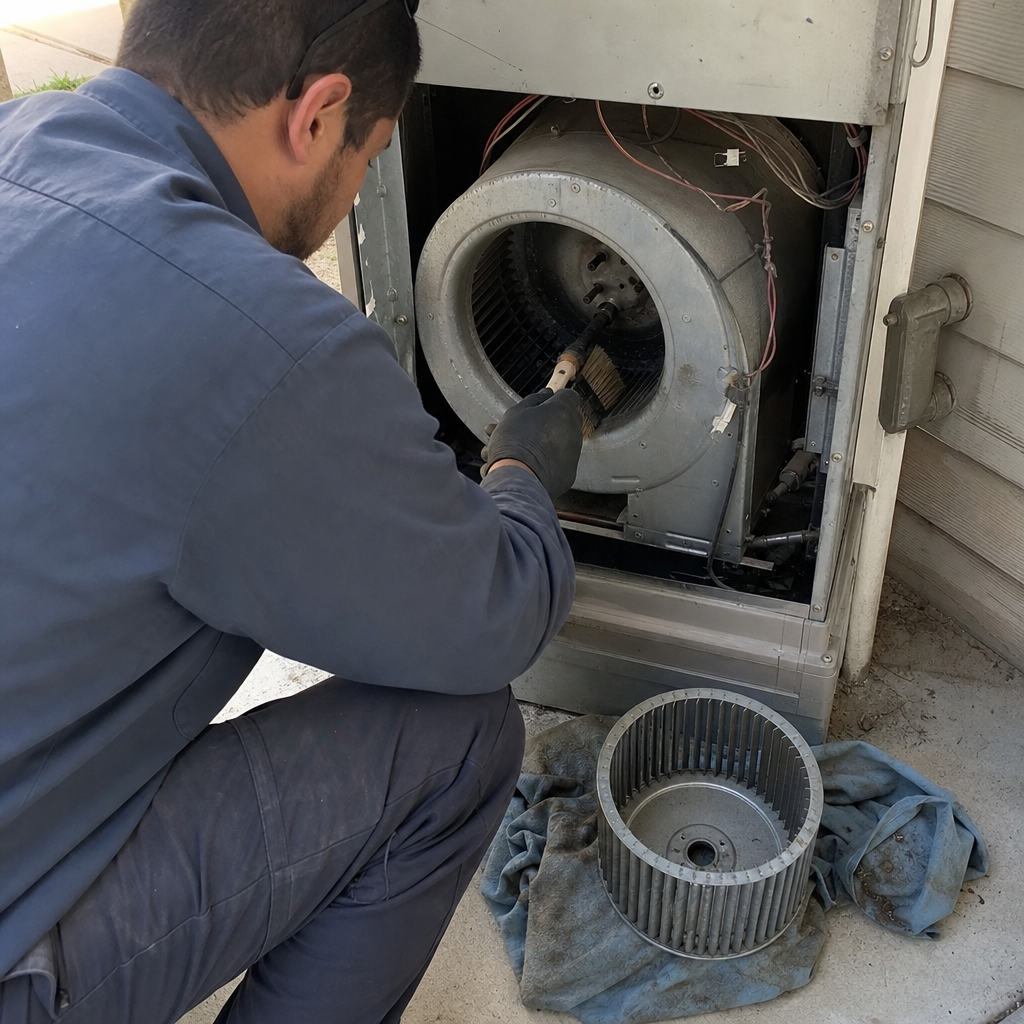
Stanford customers specifically mention our preparedness for older systems. Where other crews show up with portable shop vacs and generic brushes, Brian Rivera arrives with Rotobrush and Nikro equipment — the same tools used in commercial remediation — because mid-century duct board and flex duct configurations need more than a quick pass. We’re not dispatched labor; the most experienced person in our company is physically on your job.
Response time to Stanford averages same-day or next-day availability, depending on campus access protocols. We know the routing around construction zones near the Main Quad, the parking logistics for faculty housing off Campus Drive, and the coordination required for Escondido Village service calls. That local fluency saves you time.
Our 14 years focused exclusively on indoor air quality means we’ve encountered virtually every duct configuration found in Stanford’s housing stock. We don’t learn on your job.
Our Air Duct Cleaning Services in Stanford
Residential Duct Cleaning
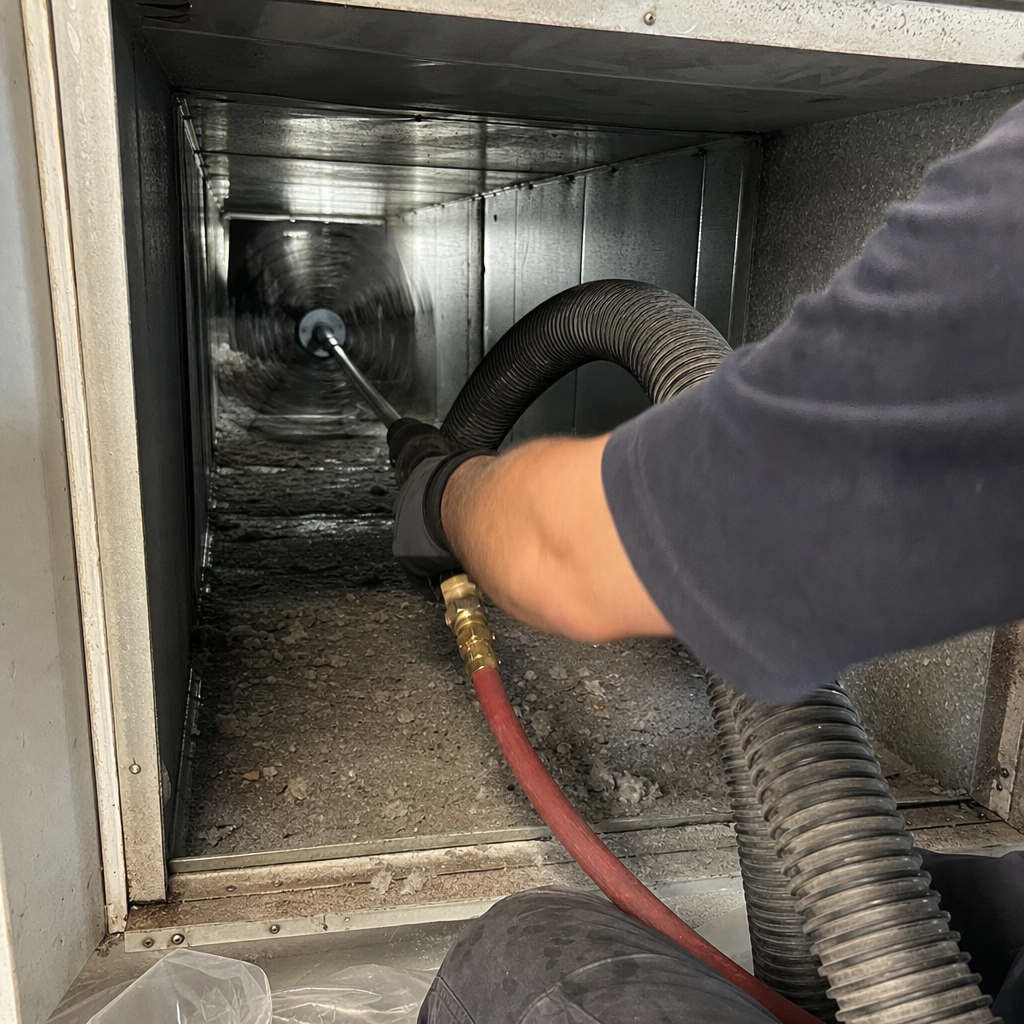
Stanford’s residential landscape is unlike anywhere else in the Bay Area. The 94305 ZIP code is almost entirely Stanford University-owned land, meaning virtually all residential HVAC and duct work takes place in university-managed properties — faculty housing, graduate student complexes, and designated staff residences. Unlike neighboring Palo Alto, there is essentially no conventional homeowner market here. Duct cleaning engagements typically involve Stanford’s Facilities Operations procurement process or university housing management, not individual property owners. We understand that workflow. We’ve worked directly with housing managers, submitted the documentation they require, and coordinated access for occupied units without disrupting residents’ schedules. Our process includes full system isolation, negative-air containment, and post-cleaning verification — the thoroughness that university oversight demands.
Commercial Duct Cleaning
Stanford’s academic and research buildings — from the aging facilities in the Quad to newer structures near the Medical Center — present distinct challenges. Pre-1980 buildings may contain asbestos-containing duct insulation or duct tape mastic, requiring abatement assessment before any mechanical cleaning begins. This compliance layer separates specialist contractors from generalists who’ve never encountered it. We coordinate with certified asbestos assessors when needed, document every step for Facilities Operations, and deploy Abatement Technologies HEPA filtration during active cleaning. Our commercial scope covers lecture halls, laboratory support spaces, and administrative buildings across campus.
Supply Duct Cleaning
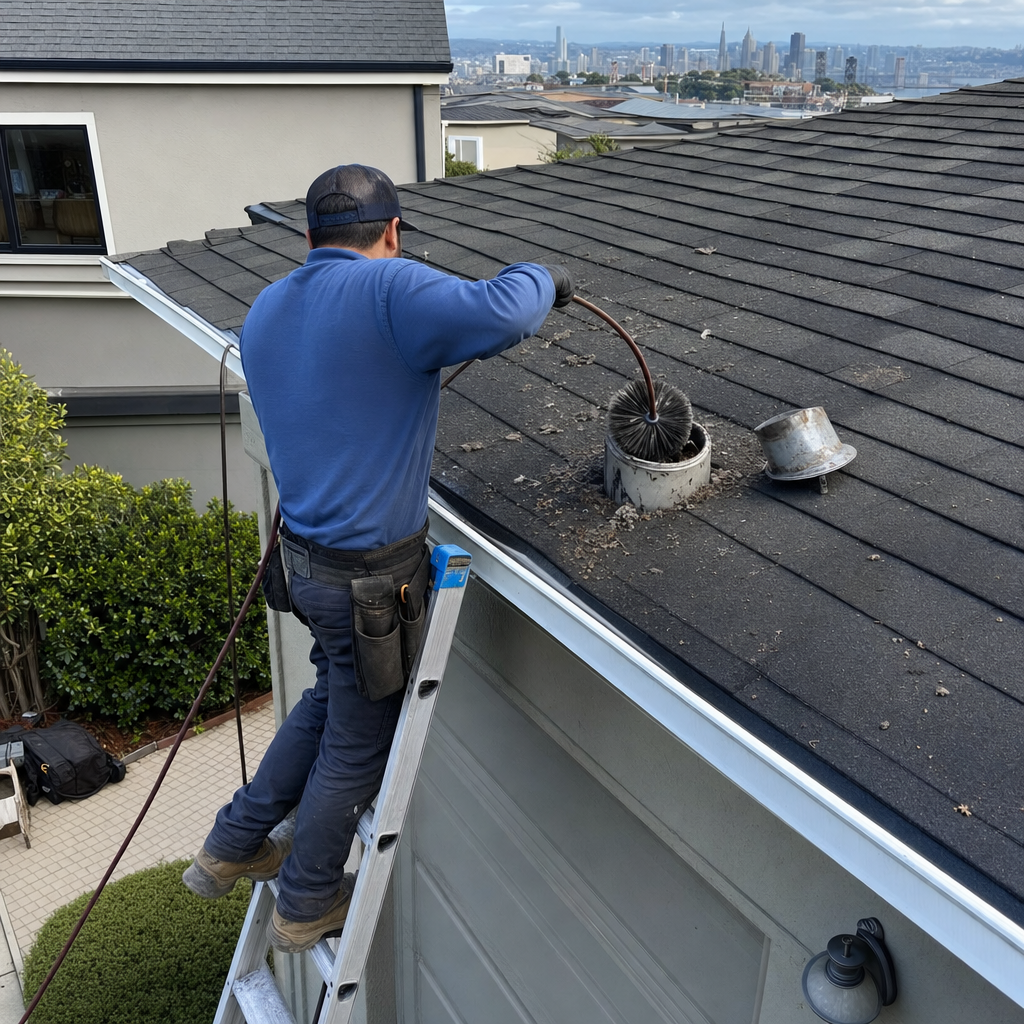
Supply ducts deliver conditioned air to your living spaces. In Stanford’s mid-century faculty homes, these often consist of original duct board from the 1950s–1970s that degrades and sheds fibers into the airstream. We recently serviced a mid-century faculty home on Alvarado Row where the original duct board had delaminated and was harboring mold. Using our Rotobrush system, we cleaned the supply and return ducts, then applied an EPA-registered antimicrobial treatment. The homeowner’s university housing manager noted a significant improvement in indoor air quality. That level of restoration requires equipment most generalists don’t carry.
Return Duct Cleaning
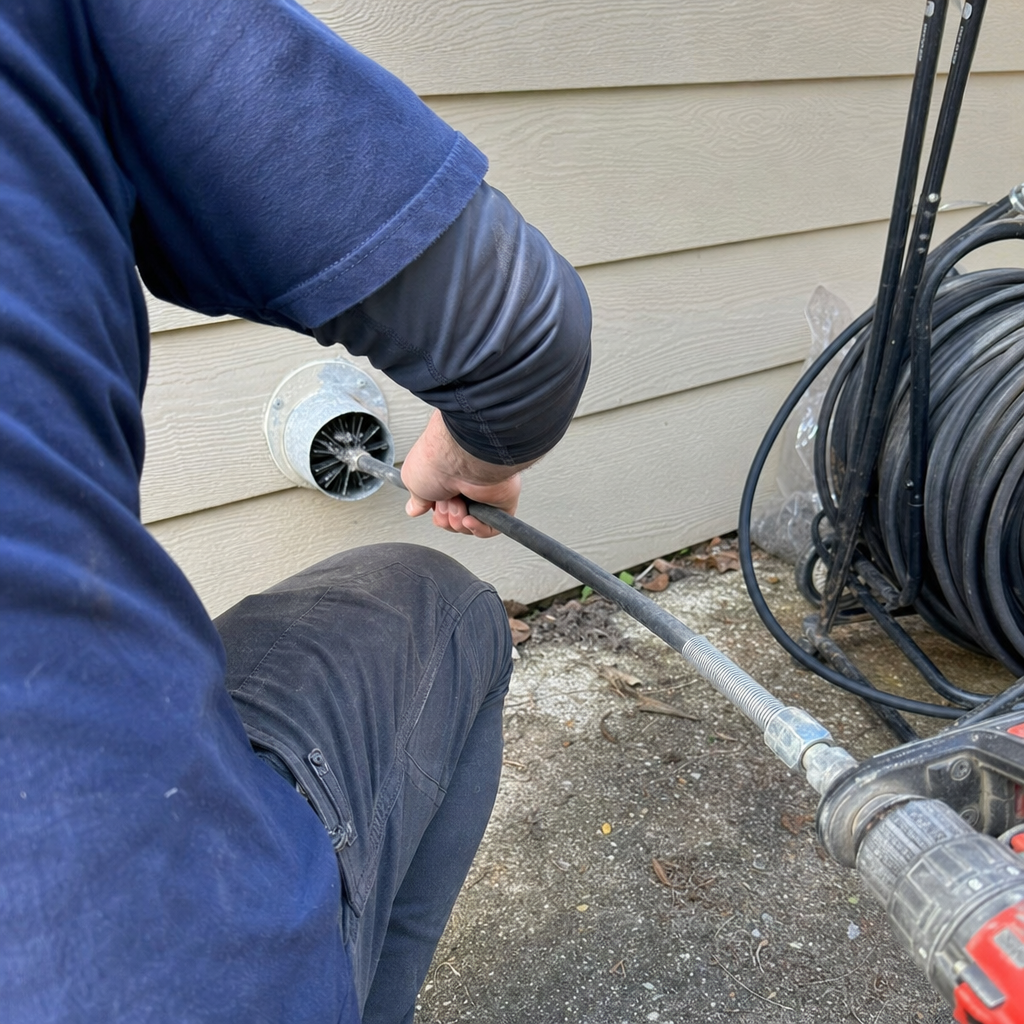
Return ducts pull air back to your HVAC system for reconditioning. In Stanford’s older housing, these pathways often accumulate the heaviest debris loads because they lack the filtration protection of supply lines. The campus sits at the base of the Santa Cruz Mountains foothills and receives heavy seasonal pollen loads from densely planted eucalyptus groves, native coast live oaks, and ornamental campus trees — particulates that infiltrate residential duct systems with minimal filtration in older housing stock. Our return duct cleaning includes video inspection to identify crushed flex duct, disconnected joints, or filter bypass issues that compound the problem.
Full System Cleaning
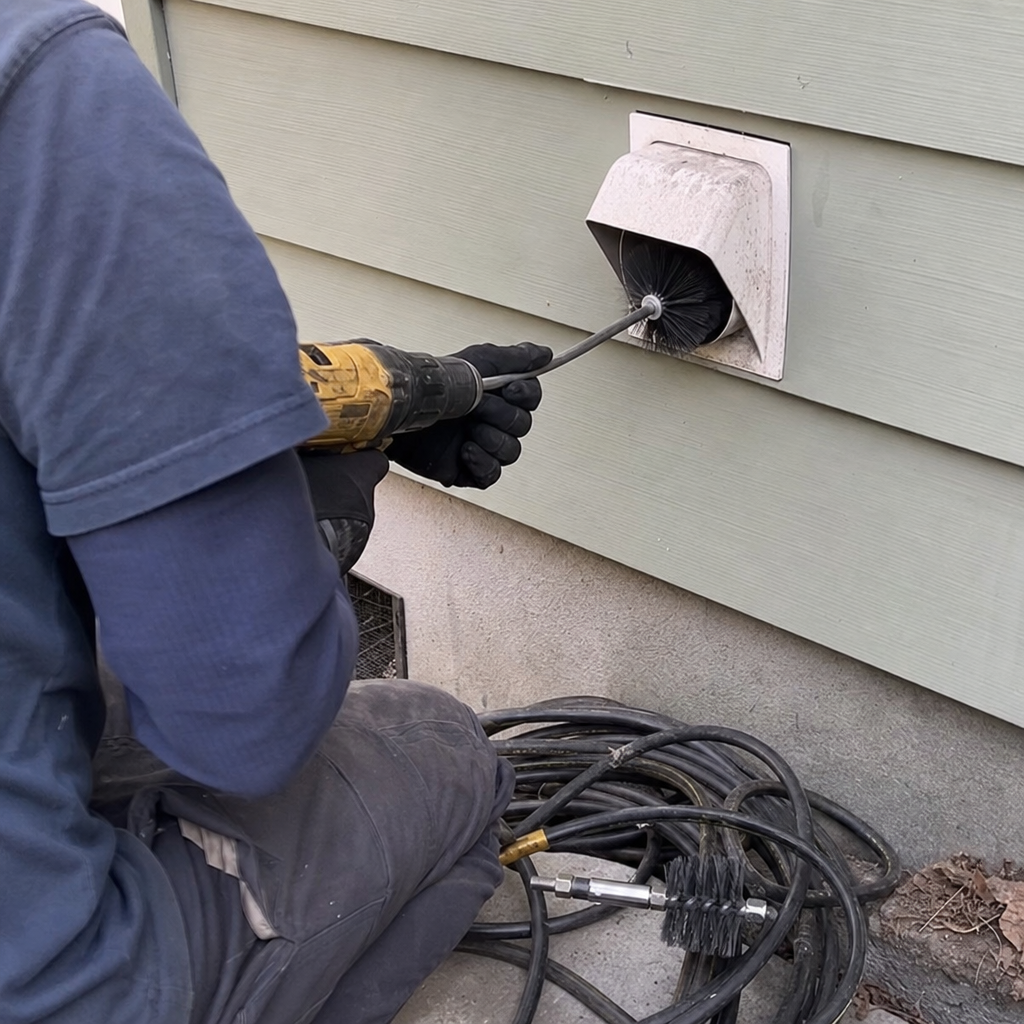
Full system cleaning integrates every component — supply ducts, return ducts, trunk lines, plenums, and registers — into one coordinated service. For Stanford properties, this is often the most cost-effective approach because partial cleaning leaves contamination sources that recontaminate cleaned sections within months. Dry, rain-free summers (May–October) allow dust and organic debris to accumulate undisturbed in ducts between seasons. A full system cleaning in late spring or early fall breaks that cycle. We also bundle dryer vent cleaning, duct sealing, and sanitizing — handled in one visit, not parceled out to three different contractors.

Video Inspection
Our video inspection service uses push-camera technology to document duct conditions before and after cleaning. For Stanford’s university-managed properties, this documentation satisfies Facilities Operations requirements and provides housing managers with verifiable proof of service scope. We flag asbestos-suspect materials, structural damage, and areas requiring repair before they become costly failures. The footage belongs to you — we provide digital copies for your records.
What happens when you call
- 1
A real person answersNo phone trees — you reach a local pro.
- 2
You get an upfront price rangeHonest numbers before anyone is dispatched.
- 3
A background-checked tech heads outLicensed & insured, dispatched right away.
- 4
You approve before work beginsNothing starts until you say go.
Trusted Brands We Service in Stanford
We deploy professional-grade equipment on every job: Rotobrush and Nikro for mechanical cleaning, Abatement Technologies for HEPA containment and negative-air control, Honeywell and Aprilaire for air quality solutions, and Guardsman-grade protection products for sanitizing and treatment applications. We don’t show up with the equipment a generalist keeps in a side van. For Stanford customers, this means we can source replacement components and filtration upgrades that match your existing system specifications — particularly important for older HVAC installations where parts availability has narrowed. Our relationships with these manufacturers also mean faster warranty processing if equipment issues arise during service.
Common Air Duct Cleaning Problems We See in Stanford Homes
- Original duct board degradation. The mid-century faculty homes built during Stanford’s 1950s–1970s expansion retain original duct board that delaminates over decades. Once the fiberglass surface breaks down, it sheds respirable fibers into the airstream. Our Rotobrush system removes loose material without damaging remaining structure, followed by encapsulation treatment where appropriate.
- Crushed or disconnected flex duct in graduate housing. The flex duct configurations common in Escondido Village and similar multi-unit complexes become compressed over time — sometimes from maintenance activity, sometimes from decades of thermal cycling. Crushed ducts bypass filtration entirely and pull unfiltered air from crawlspaces or wall cavities. Video inspection identifies these failures before cleaning begins.
- Asbestos-containing materials in pre-1980 buildings. Pre-1980 faculty homes and older academic support buildings may have asbestos-containing duct insulation or duct tape mastic — a known hazard in this era of construction. We require abatement assessment before any mechanical cleaning, a compliance layer that contractors working only in newer Palo Alto or Menlo Park subdivisions rarely encounter. Skip this step and you risk fiber release throughout the building.
- Seasonal pollen infiltration from campus vegetation. Stanford’s ornamental plantings and native oak woodlands generate pollen loads that overwhelm standard filtration in older systems. Without aggressive duct cleaning and upgraded filtration, these particulates accumulate in ductwork and recirculate during heating and cooling cycles. We see the worst buildup in homes with original 1-inch filter slots that can’t accommodate modern media.
Pricing for Air Duct Cleaning in Stanford, CA
| Service | Typical Range in Stanford |
|---|---|
| Residential duct cleaning (full system, faculty home) | $380–$620 |
| Graduate apartment / multi-unit flex duct cleaning | $280–$450 |
| Commercial / institutional (per sq ft, with documentation) | $0.35–$0.65 |
| Video inspection with written report | $150–$220 |
| Asbestos assessment coordination (third-party lab) | $280–$450 |
| EPA-registered antimicrobial treatment | $120–$180 |
Several factors move Stanford jobs within these ranges: university procurement requirements that extend scheduling coordination, asbestos assessment needs in pre-1980 buildings, and access constraints in occupied graduate housing. We don’t quote blind. Every estimate follows a brief phone assessment or on-site evaluation — free, with no obligation. Call (855) 908-0725 and we’ll pin down your exact scope and price.
We Also Serve Cities Near Stanford
Our service radius covers the full Peninsula corridor. We regularly work in Palo Alto — where conventional homeowner markets allow faster scheduling without university coordination — Atherton with its estate-scale systems, East Palo Alto for residential and light commercial properties, and Los Altos Hills where hillside duct configurations present unique airflow challenges. Each city gets the same owner-led service, but Stanford’s university-managed properties demand the specialized workflow we’ve refined over years of direct engagement.
Serving Stanford, CA — Our Local Coverage Area
We’re based in the Stanford area and know this community well. Use the map below to see our service coverage — if you’re nearby, we can almost certainly help.
FAQs — Air Duct Cleaning in Stanford
Yes — because Stanford’s 94305 ZIP code is almost entirely university-owned land, faculty housing duct cleaning typically requires coordination through Stanford’s Facilities Operations or your assigned housing manager, not independent contractor engagement. We submit the documentation they require, coordinate access protocols, and schedule around university maintenance windows. Call (855) 908-0725 and we’ll walk you through the approval pathway — estimates are free.
We cannot mechanically clean ducts with suspected asbestos-containing materials until certified abatement assessment clears the work. Pre-1980 faculty homes and academic support buildings commonly contain asbestos in duct insulation or mastic tape. We coordinate with certified assessors, document findings for Facilities Operations, and proceed only after clearance. This protects occupants and satisfies university liability requirements. Call (855) 908-0725 to schedule an inspection if your building dates to this era.
Stanford’s dense eucalyptus groves and native coast live oaks generate pollen loads significantly heavier than surrounding urban areas, meaning ducts in older homes with minimal filtration need cleaning every 2–3 years rather than the typical 3–5 year interval. Dry summers allow accumulation without natural washout. Homes with upgraded MERV 13+ filtration and tight duct sealing can extend this interval. Call (855) 908-0725 for a video inspection to assess your current buildup.
Original duct board from the 1950s–1970s degrades and sheds fibers into the airstream, requiring careful vacuuming with HEPA containment to prevent recontamination during cleaning. Our Rotobrush system is specifically configured for this material — aggressive enough to remove delaminated layers, controlled enough to preserve intact structure. We follow with antimicrobial treatment and can recommend encapsulation or partial replacement where degradation is advanced. Call (855) 908-0725 for an assessment of your specific duct board condition.
Yes — we regularly clean duct systems in Escondido Village and similar Stanford graduate housing complexes, coordinating with housing management for access to occupied units. Flex duct configurations in these buildings commonly suffer crushing and disconnection that bypasses filtration. Our video inspection identifies these structural issues before cleaning, and we document findings for housing managers. Call (855) 908-0725 to arrange service through your building’s maintenance channel.
Ready to get started? Call (855) 908-0725 for a free estimate on air duct cleaning in Stanford. Brian Rivera — owner and lead technician — will assess your system personally, explain what your ducts actually need, and quote the work upfront. No dispatchers. No upsell scripts. Just 14 years of focused expertise, professional-grade Rotobrush and Nikro equipment, and a 4.9-star record across 1,200+ verified jobs.
Written by Brian Rivera, Owner at Northstar Air Duct Cleaning Service San Francisco, serving Stanford since 2010.